A young volunteer firefighter, Andrew Coates, recently made headlines when his application for a paid position doing the job he loves was rejected. The reason? He was homeschooled.
According to the city’s human resources director, the high school diploma that the paid firefighter position required needed to be from an accredited high school. Because Coates’ diploma was from his family’s unaccredited homeschool, Coates wasn’t qualified – never mind the fact that he had his state-certified EMT license.
The chief of the fire department to which Coates applied called the action discrimination. Such discrimination may have been par for the course 50 years ago, when the modern homeschool movement was a largely unknown development, but today, it sounds rather unbelievable given the fact that homeschooling has entered the mainstream.
Dixie Dillon Lane traces this ascent from obscure to mainstream in her recent book, “Skipping School.” A recent national survey shows that 6.5% of American households engage in homeschooling, a “number nearly double the 2019 NCES [National Center for Education Statistics] rate,” Lane says. Yet despite such dramatic growth, prejudices and stereotypes about homeschooling still exist, including the following five which Lane outlines in her book.
1. Only white people homeschool
Homeschooling is sometimes framed as a racially divisive form of education in which only white families partake. But surveys indicate that the homeschool population may be even more diverse than the national population “with only about 59 percent of homeschoolers reporting as white in 2016,” Lane writes.
2. Homeschool is only for the privileged
Because homeschooling often works best when one parent stays home and does the school administrative and teaching work, many people automatically assume that homeschool families are those whose parents have high-paying jobs and a comfortable lifestyle. Yet the data shows that many homeschool families are middle class, and “on average only slightly less wealthy than the national average,” Lane writes.
3. Homeschool kids are unsocialized
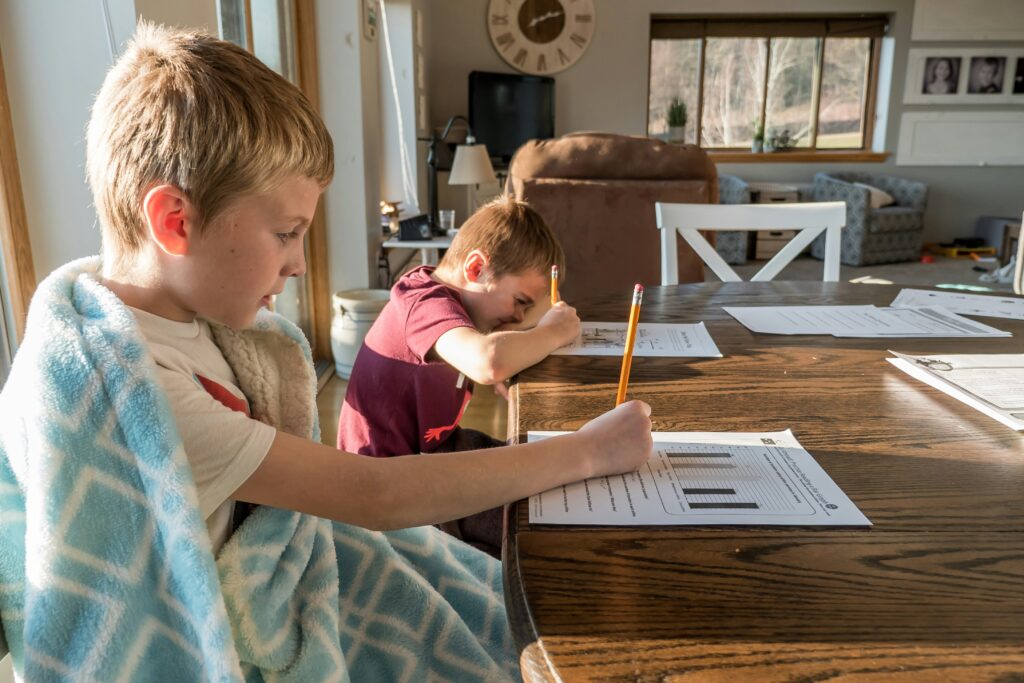
“What about socialization?” is the number one question homeschooled families have been asked over the last several decades of the modern homeschool movement, a query that subtly indicates that homeschool students are socially awkward and unable to function in the real world unless they’re regularly exposed to a classroom of their peers.
But homeschoolers are well-adjusted on the social front, Lane explains, even if they must be more intentional in the socialization process. Research shows that homeschoolers are “socialized within their families rather than in a school context,” but they “also participated in outside events and institutions to an even higher degree than did nonhomeschoolers.” Lane also notes that homeschoolers are more likely to use the library, visit museums, and go to zoos and historical sites than non-homeschooling families, which suggests that homeschoolers may actually be more culturally well-rounded than their public school counterparts.
4. Homeschoolers are religious freaks
While many of the homeschooling pioneers of the late 20th century educated their children because of religious convictions, the mainstreaming of homeschooling has caused religious reasons for homeschooling to decline in prominence. According to Lane, recent surveys show that parental concerns about elements such as school safety (environment) and academics are more likely to cause them to homeschool than concerns that their children are not receiving religious and moral instruction.
5. Homeschool kids are geniuses
Because most stories on homeschool families often feature the anomalies, one can get the idea that all homeschool kids head off to college at age 12, learn Latin, and become musical prodigies. But that isn’t necessarily the case. As I’ve long said, homeschool kids aren’t geniuses – they just benefit by escaping from a system that sits them in a desk all day, teaches to the lowest common denominator, and thus kills a child’s interest in learning.
But while homeschooled kids may not all be geniuses, they do fare far better academically than their public school counterparts. According to Lane, a 2020 report on ACT scores showed that “homeschoolers’ composite ACT score was significantly above that of public schoolers,” suggesting that homeschooling “is not academically neglectful when compared to public schooling.”
Stopping the Stereotypes
All stereotypes have a hard time dying, and as such, the above homeschool stereotypes may always be with us. But that’s okay, because in the end, as Lane explains, one of the most important things about homeschooling is that it allows parents to “retain significant authority” over their children’s education. In essence, this is what former teacher and author John Taylor Gatto called “The Curriculum of the Family,” which he claimed to be “at the heart of any good life.”
Coates, his unaccredited homeschool diploma, and his desire to risk his life to serve others is evidence of this “good life” extending from one family to many others in the community … that is, as long as HR potentates are willing to step back and examine things through the lens of common sense.
—
This article was made possible by The Fred & Rheta Skelton Center for Cultural Renewal, a project of 1819 News.
Image credit:



















Leave a Comment
Your email address will not be published. Required fields are marked with *