
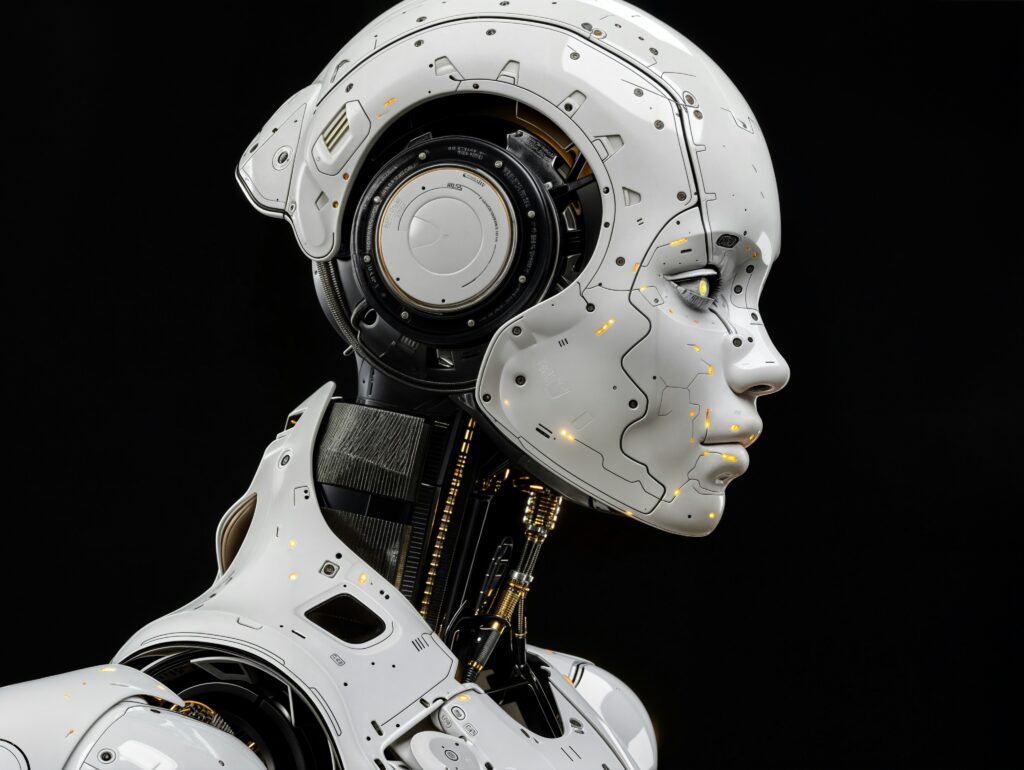
If you spent any time consuming news media these past few weeks, you’re aware of the AI fears flooding the world. Doom-laden predictions saturate the headlines, and each day another somewhat frazzled, pale-faced, bespectacled whistleblower emerges from a dark server room to prophesy the end.
Panic over AI’s alleged world-ending capabilities has been smoldering under the surface for some time, but now it’s suddenly erupted to the top of international awareness.
What are we to make of this? First, when this many people with in-depth knowledge of a subject suddenly begin warning of its dangers, we should probably pay attention.
On the other hand, fear is a powerful tool for control, and cataclysmic predictions are often overblown. Plus, none of the current experts warning us of the end of the world have provided a very clear explanation of the exact mechanism by which we go from Chat-GPT helping you write an email to killer robots on the streets hunting people with lasers.
I’m not saying there are no dangers; I’m not a computer scientist, and much of this tech-speak is beyond me. But I do know that when fear enters the room, critical thinking often leaves it.
We must be careful not to allow fears to suppress rational thought and level-headed decision-making. We need AI doomsayers to be precise and explain the risks in concrete detail. We must assess these nightmare scenarios calmly and logically to see if they hold up to real scrutiny.
So before running for our bunkers, let’s ask a few questions. Here are some problems I see with the current extreme predictions about AI.
There’s real doubt about whether our existing power grid could actually support the computing power needed for an AGI – artificial generalized intelligence, an AI with the intelligence and ability to wipe out humanity – to emerge.
The computing power required to train cutting-edge AI models has been doubling every five to six months. Thus, the development of AI data centers to house and run this massive computing power is also accelerating at break-neck speed – faster than our power grid can accommodate.
For the moment, it seems plausible that the power grid will form a kind of natural bottleneck on the development of AI. While data centers can be financed and constructed in years, the grid expansion needed to run them is on a longer timeline, more like decades.
A single data center sucks up the same amount of energy as a small or mid-sized city. Presumably, the fabled superintelligent AI is going to require far, far more computing power than any existing models, which are already challenging our electrical grid.
It’s possible that new ways of generating electricity will be invented and the grid will catch up with demand – but it’s hard to imagine that happening in the next four years – thus casting some doubt on the “we’re doomed by 2030” narrative. Unlike AI capabilities, electrical infrastructure doesn’t grow at an exponential rate.
The energy problem also applies to robotics. Some doomsday scenarios involve AI deploying robots to do its dirty work, but, at least right now, advanced robotics also pose an energy problem. For instance, Boston Dynamics’ Atlas humanoid robot has a battery life of just four hours before it needs recharging – and that charging is another siphon on the electrical grid.
Is it really feasible that some AI would somehow churn out millions of killer robots that need constant charging without also crashing the already over-taxed electrical grid?
And if not through robots, then how would AI gain enough power in the physical world to do bodily harm? Nukes? Nuclear arsenals are carefully protected and “air-gapped” from publicly accessible internet, so the only way AI could gain access to them would be through some physical means. It remains unclear to me how AI bridges the gap from the digital to the physical world.
A more likely scenario would be some kind of cyberattack that targets critical digital infrastructure, since the digital world is already AI’s “natural habitat.” We had a taste of this when a swarm of AI agents hacked Hugging Face, an online platform where developers share artificial intelligence models and datasets. Here, too, it’s hard to imagine a cyberattack so dramatic that it could immediately wipe out humanity – even though it could certainly do a lot of damage.
All of that is assuming we get far, far beyond existing AI models which, when you understand how they work, turn out to be more like advanced text-generating and statistical prediction machines than omnipotent masterminds.
Again, I’m no expert in computer science, and it might be true that all the dire predictions circulating right now are completely accurate. Moreover, I agree with the doomsayers that we should be very cautious and get some kind of regulations in place because AI presents dangers to humanity for a whole host of different reasons.
With all that said – whether the AI fears are real or just the dark musings of a bored and decadent society – I’m confident of one thing: panic is never the answer.
—
This article was made possible by The Fred & Rheta Skelton Center for Cultural Renewal.
Image credit: Unsplash
























Leave a Comment
Your email address will not be published. Required fields are marked with *