
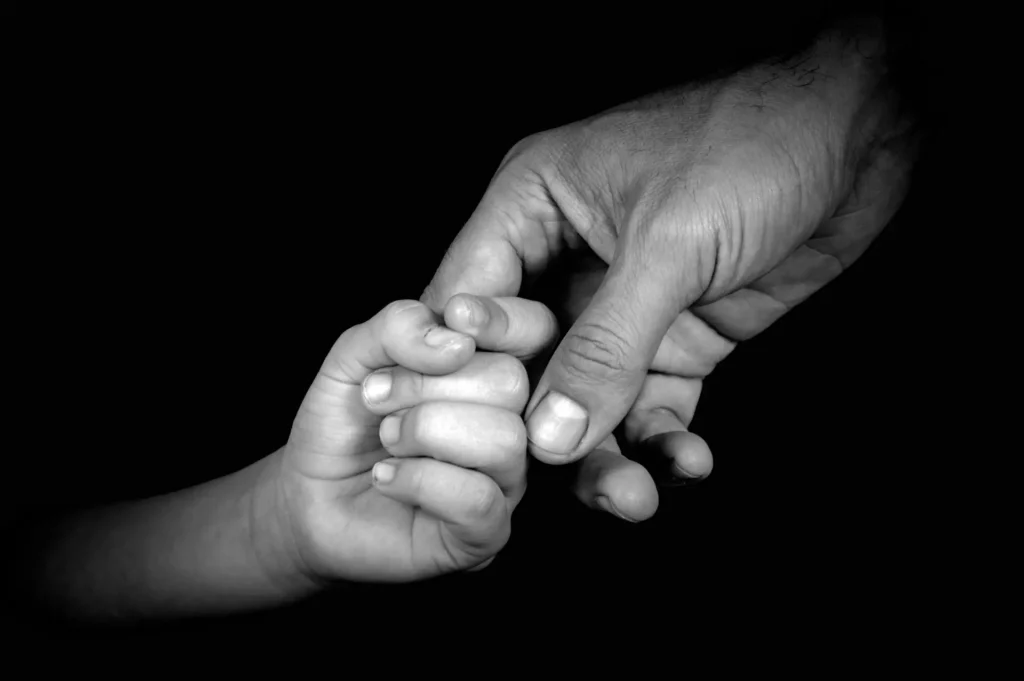
Two of today’s top shows – “Invincible” and “The Boys” – happen to be superhero-themed, derived from graphic novels, and produced by Amazon studios. They also are both uncomfortably centered around various daddy issues, as the following look at each demonstrates.
Invincible
In this coming-of-age tale, Mark Grayson, son of Superman-type hero Omni-Man, is making sense of high school and his newly realized powers. Upon seeing his son begin growing into these inherited powers, Omni-Man begins phase two of his heretofore unknown plan of world domination. After violently dispatching the prominent superhero team of Earth by himself, he reveals that he comes from a distant, imperialist planet of superhuman-like aliens who sent him to Earth to conquer it for his Viltrumite Empire.
Mark’s feelings of betrayal lead to a confrontation between him and his father, leaving Mark nearly dead. Mark’s dad seeks to recruit him to the Viltrumite cause, but Mark, whose emotional and moral compass is more earthly than Viltrumite, rejects his father’s proposal.
Mark’s powerful emergence and willingness to sacrifice and defend his planet complicate the story from season to season. Omni-Man leaves, but not before vowing to return and finish his mission. His son’s rejection leaves him confused, particularly since Omni-Man sees reality through the lens of power while Mark sees reality according to love. Omni-Man eventually “finds himself” on another distant planet and sires another child in a sad attempt to “get it right” where he went wrong with Mark.
Mark and his father eventually reconcile because they have a greater fight against the latter’s original home planet, whose leader seeks to continue its universal conquest. This rising up against their ancestral home and way of life is its own fight against abusive fatherhood on a planetary scale.
This father-son relationship is eventually healed because the father had to realize his mistake and the son had to understand why his father could have seen things so tragically wrong. One was primarily at fault, but both had to move and develop in order for authentic forgiveness to occur.
The Boys
Though more popular for its crass humor, explicit imagery, and gratuitous violence, “The Boys” has some profound satirical points to make. Many of these are directed at its main villain, Homelander, who represents oppressive authoritarianism in a cape. The primary conflict of the show is Homelander’s attempt to tighten his tyrannical grip upon the world. However, in his intimate moments, we see a needy, weak, man-child who lacked the moral direction and guidance of an elder to whom he could look.
From this later emerges Homelander’s estranged father, Soldier Boy. Like Marvel’s Captain America, Soldier Boy comes out of cryogenic sleep, but to aid Homelander in his totalitarian efforts rather than to do good. Just as Homelander represents a modern, oppressive governmental tyranny, so Soldier Boy represents the older, yet equally oppressive in the eyes of the writers, social tyranny. Both characters act as abusive father figures.
Faith of the Fatherless
While “The Boys’” Homelander and Soldier Boy garner less sympathy than Mark and Omni-Man from “Invincible,” they highlight a similar theme present in all father wounds, namely, the cyclical, generational effect.
The Bible often talks of the sins of the father resonating to multiple generations. This extends from the father of humanity, Adam, to everyone throughout history, and is known in Christian theology as Original Sin – or as we say it in the contemporary lexicon – and on a smaller scale – “daddy issues.”
It is worth noting that these two hit shows, particularly popular with men in the 18–49 age demographic, reflect a generation of those reconciling wounded fatherhood with the burgeoning challenge of their own fatherhood. Like all humans, this population’s desire is conditioned by models. That model must be a reflection, an “image,” of true fatherhood himself, if he is going to condition the desires of those who look upon him. For whoever sees Him, sees true Fatherhood from which all human fatherhood seeks to imitate.
—
This article was made possible by The Fred & Rheta Skelton Center for Cultural Renewal.
Image credit: Public Domain Pictures























Leave a Comment
Your email address will not be published. Required fields are marked with *