
We’re touchy when it comes to politics.
“I liked insert [celebrity name], but then he became too political.”
“Don’t talk politics at the table.”
“I don’t think Christians should get political.”
But when we say “politics,” what exactly are we talking about?
What are the topics that have been banished from the banter at the table? Obviously, it’s considered impolite to talk about supporting this war or that candidate. I’d prefer it if my favorite celebrity didn’t do that. (Okay, sure, they can if they agree with me.)
But can I talk about tax codes? Is that politics?
And my city council just moved trash pickup day to Tuesday, and that kind of annoys me. Can Christians have an opinion on that?
The boundaries of polite small talk reveal just how narrow our understanding of the political has become. We have reduced politics to critical elections and high-profile campaigns and politicians. But politics is much older and much deeper than that.
Politics is the ordering of our common life together toward some vision of the good. Because human beings are not isolated individuals but members of communities, politics begins whenever human wills must be ordered toward a shared life. That means politics begins wherever two wills meet and must answer the question: How should we live together?
“Could you pass the salt?”
Will I or won’t I?
Perhaps the person who posed the request for salt didn’t ask politely. Or perhaps I hope to get the gravy in return. Perhaps I am deciding whether my own desire matters more than the good of the person sitting beside me.
This is politics.
It may be small politics, but it is politics nonetheless. And if it goes wrong, the consequences are real. A Thanksgiving table can become just as divided as a nation when human wills refuse to love one another.
Does this matter? Absolutely.
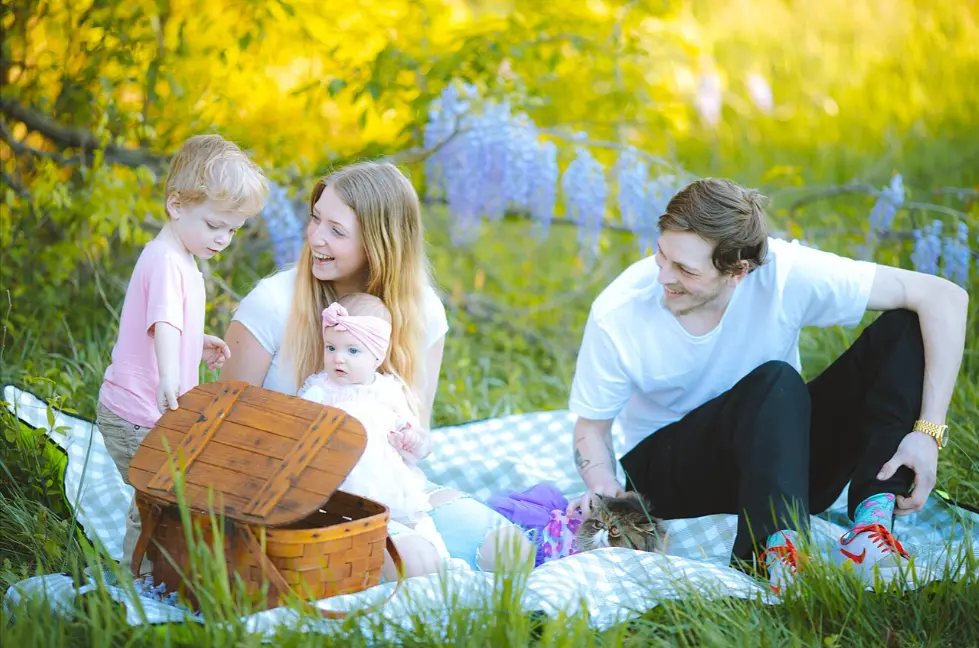
Because, unfortunately, modernity has created a legal fiction called the public-private distinction. We have convinced ourselves that only what is done in public is political. The things done behind closed doors are merely personal. It is my right to do whatever I want in the privacy of my own home.
But if we stop and think, we know that is not true. As the family dinner table goes, so goes the nation.
We shouldn’t really believe in a sharp division between public and private because we know how communities are actually built. Our country is made up of little towns, which are made up of little neighborhoods, which are made up of little homes and local churches. The health of a nation depends upon the health of the communities that form it.
It is impossible to imagine a healthy nation made up of unhealthy families.
So do you want to get involved in politics? You don’t have to run for public office. You don’t have to become a commentator, a campaigner, or a professional activist. You need to recognize that you are already engaged in the essential work of nation-building in the way you love and support your kids, in the way you support your neighbors and small businesses, and in all the ways that you are a responsible citizen, loving relative, or loyal friend.
Perhaps above all, when you are a faithful Christian.
If politics is the ordering of our common life through the negotiation of human wills, then Christian politics is the ordering of human wills through the love of one another. A Christian nation is not simply a nation with Christian laws or Christian leaders. It is a nation whose cities, neighborhoods, churches, and families, enabled by grace, love one another.
I do not mean to sound like a quietist who wants to abandon policymaking. Who sits in the White House or the halls of Congress matters. But the higher order of communal life is not more important than the lower orders, any more than the leaves of a tree are more important than the trunk. Each part depends on the health of the whole.
The entire political community can only be as healthy – or as holy – as all the people who make it up.
And that means you. You are a politician.
Be the politician you wish to see in the world.
—
This article was made possible by The Fred & Rheta Skelton Center for Cultural Renewal.
Image credit: Reba Spike, CC BY 2.0






















Leave a Comment
Your email address will not be published. Required fields are marked with *