My new (to me) car is a 2014 commuter. Nothing about it is glamorous. A co-worker has affectionately referred to the paint color as casket blue, if that tells you anything. But my car has a built-in CD player, and I consider that dated feature worth commenting on.
The plan is simple. Seek out well-loved CDs instead of pulling up a personally curated list of songs I have stored on my iPhone. It’s my humble attempt to cultivate ritual over convenience. And my casket-blue vehicle is going to help me get there.
Why do I want to do this, you might ask? Because I believe that physical media – the imperfect, so-called outdated stuff – matters more than we might think.
The Art of Today
Today, anyone can make art. Well, technically speaking. AI can generate an album (The Velvet Sundown, anyone?), produce a film, illustrate a graphic novel, and, yes, write novels with lots of pages. And it can do all these things in the time it takes the average coffee-drinker to finish their vanilla latte. The creative barrier to entry is disappearing.
The result isn’t some golden age of art. It’s a flood of lifeless, hollow, regurgitated muck that masquerades as art. Last year, an AI-generated musician was “signed” to a multi-million-dollar record deal and charted on Billboard.
Where was the widespread outrage? Where were the hundreds, maybe thousands, of musicians condemning this? It’s our collective lack of condemnation that’s more alarming to me than the mere creation of this stuff.
The Way Forward May Be Backwards
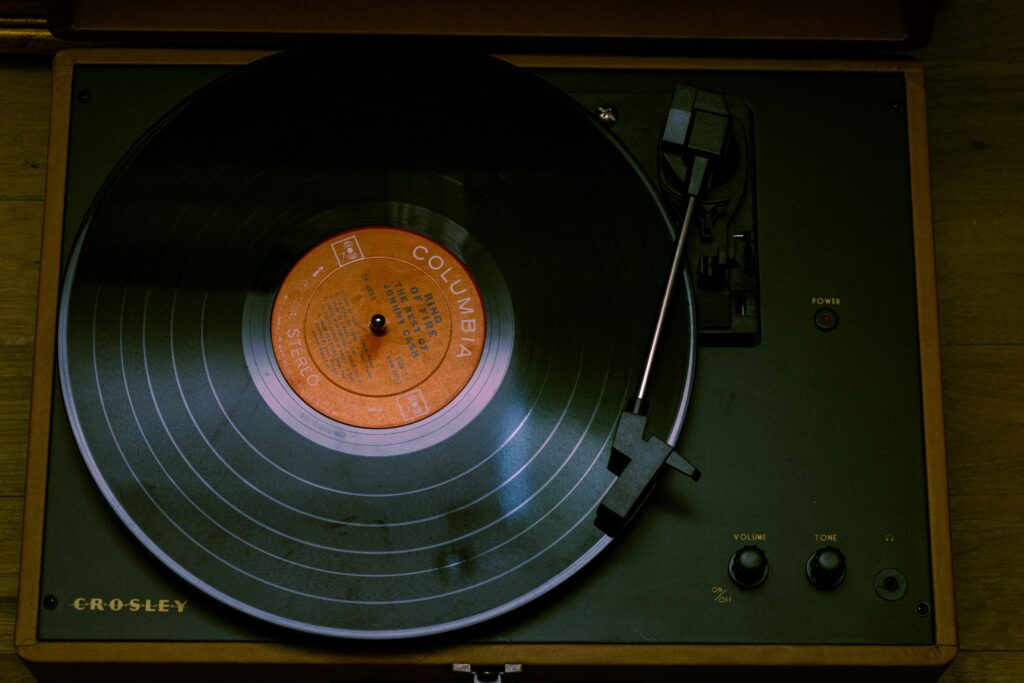
Against this surreal backdrop, something interesting is happening. People are buying records again. And CDs. And cassette tapes.
At record stores in Jackson, Miss., store owners say younger buyers are driving the trend, with roughly 80% of CD and cassette customers being college students or younger. This isn’t nostalgia. These are people who grew up on streaming and smartphones. Yet, they appear to be turning away from it.
But why?
Part of it is ownership. A Spotify playlist, despite being created by you, doesn’t belong to you. It exists at the intersection of a licensing agreement, a company’s quarterly decision, and a server somewhere that you’ll never see. But the vinyl you purchase at that hole-in-the-wall shop everyone talks about? That’s yours. It sits on a shelf, has scratches, and may be a little warped from sitting in the previous owner’s car for too long. It’s real in a way that digital files aren’t.
There’s also something harder to name, something to do with how physical media fundamentally changes the experience of the art itself. A record that crackles. A VHS tape with tracking lines. A hand-drawn comic panel with visible ink and imperfect edges.
These aren’t flaws. They’re evidence that a human being made something, that time passed, that the object has a history.
Compare that to the hyper-polished production quality of most contemporary music, or the impossibly smooth animation of modern film. These works are impressive. But they’re also, increasingly, indistinguishable from each other. When everything’s perfect, nothing is distinct. Imperfection exists in virtually every piece of authentic art.
Physical media turns consumption into ritual, and rituals slow us down. An album listened to from start to finish, in the precise order the artist intended, is a different experience than a shuffle queue. A graphic novel read in a single sitting, without a notification interrupting every third page, is a different kind of attention.
These constraints are generative. The resistance of the physical object creates conditions for real engagement. One where you actually listen. Actually look. Actually read.
Moving Forward
I’m not allergic to streaming or polished filmmaking. Some of them have a place in the art world. But I believe physical media also deserves a place in the lives of those who take art seriously. The turn toward vinyl, CDs, and film photography, for example, isn’t watermarks of cultural regression. In fact, it’s the opposite. It’s a sign that our culture – at least artistically – hungers for something more authentic. More imperfect. More human.
As for me, my car’s CD player’s waiting. (I’m currently on the lookout for Pink Floyd’s “Dark Side of the Moon,” if you’re wondering.)
—
This article was made possible by The Fred & Rheta Skelton Center for Cultural Renewal.
Image credit: Unsplash





















Leave a Comment
Your email address will not be published. Required fields are marked with *