
The much-anticipated release of the newest season of “The Bachelorette,” starring influencer Taylor Frankie Paul, was recently canceled. The reason was a leaked video showing Paul putting her ex-boyfriend, Dakota Mortensen, into a headlock during a domestic fight and throwing a metal chair at him that hit her daughter instead. The entire altercation was not just juicy reality television played out in real time, but a complete reversal of what feminists assure us is the primary order of oppression in the world: men as the aggressors, women as the victims.
Paul is, predictably, doubling down. After years of positioning herself as a feminist icon who smashes the patriarchy through her flagrant promiscuity, she seems shocked that violence against a man would be frowned upon.
Paul was living the feminist dream. A divorce didn’t stop her from having a successful career as an influencer, nor did it prevent her from enjoying motherhood. An on-again, off-again relationship with Mortensen didn’t keep her from starring in the most famous dating reality show in the world. Yet, overnight, her life is in shambles. No one, not even those defending her, would really want to trade places with her.
For many women, seeing the consequences of the feminist “dream” on display like this disillusions them to the lies they have been told. In recent years, many have flocked to another kind of influencer – the elusive “trad wife,” an internet slang term often used to describe anyone from Hannah Neeleman to Michelle Duggar. Many “trad wives” lean into the term, amassing millions of followers by discussing serving their husbands, having lots of babies, wearing long dresses, and cooking and baking from scratch.
These influencers vary in seriousness. Some are returning to a wholesome, noble way of life while encouraging other women to reject careerism in favor of domesticity. Others are wearing a traditional lifestyle as a skinsuit to score brand deals and manufacture outrage.
But rather than dismissing what is often a cartoonish, unrealistic vision of womanhood, Emma Waters encourages us to see the trad wife movement through a different lens. In her newly released book, “Lead Like Jael,” Waters writes, “Despite the tradwife’s general rejection of paid work outside the home, it struck me that these women were not reacting against work itself, but against a system that told them their worth was measured by career success.”
It’s impossible to overstate how deeply feminism has infected our society. It has been so successful in its mission to androgenize the sexes that even Waters, a homeschooled Christian, once broke up with her now-husband in a fit of self-described foolishness because she was terrified that marriage and children would derail her promising career.
Conservatives have fallen for the lies of feminism in more ways than they admit. Scared of being called “sexist” for affirming some biological distinction between the sexes, most conservatives have abandoned any notion of gender roles as a positive good in society. Waters remembers that Donald Trump’s 2020 State of the Union address “celebrated that more women were in the workforce than ever before.”
Waters pulls no punches in calling out the right’s participation in selling women the careerism lie. She recalls one widely shared Wall Street Journal interview where U.S. Sen. Katie Britt (R-Ala.) dismissed her own concerns that she might “not be present for everything” in her child’s life, quoting her daughter who allegedly told her, “Doesn’t God call on you to do hard things?”
“That line has been praised in Christian and conservative circles as an anthem of courage, but notice what it leaves unchallenged: the assumption that faithfulness must look like leaving the home to prove oneself in public life,” Waters writes. “Instead of identifying the home as a primary place of leadership and influence, this narrative casts motherhood and household stewardship as obstacles to overcome, not assignments to embrace.”
But “Lead Like Jael” isn’t just another book decrying the easy target of modern feminism. Waters offers practical advice to women in all stages of life. Whether married, a mother, or a single Christian woman, Waters’ message is clear: don’t become so enamored of your career that you lose sight of what makes your femininity unique. She encourages women to embrace seven feminine virtues, including discernment, shrewdness, resourcefulness, and hospitality, closing with two chapters about how these look in marriage and motherhood.
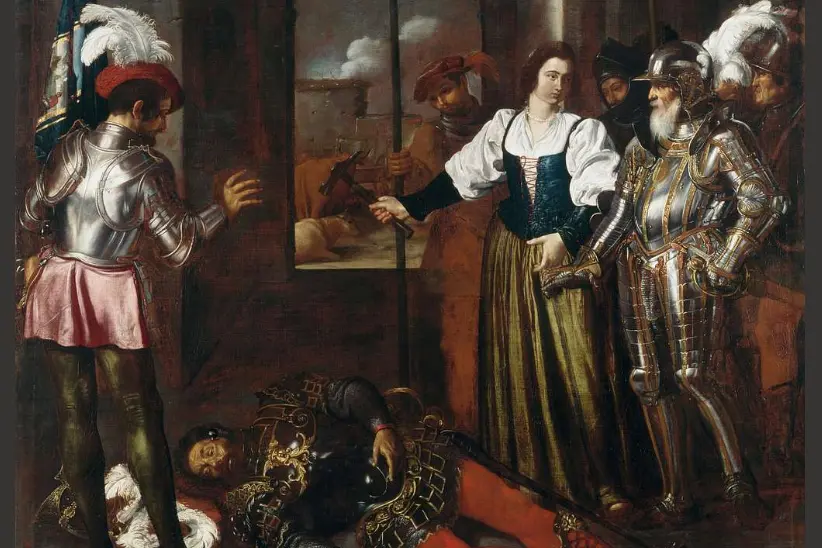
The book’s provocative title refers to the biblical story of a Hebrew woman who invited Sisera, the Canaanite commander fighting the Israelites, into her tent for a refreshing drink and a nap, only to drive a deadly tent peg into his skull while he slept, ensuring her people’s victory. Jael’s biblical story exemplifies how God presents women with the best opportunities for faithfulness, not when they act like men, but when they embrace their feminine role in the home.
“The Tent Peg Strategy is not another internet trend or ideology,” Waters writes in the book’s introduction. “It is a call to courage, clarity, and maturity for every season of a woman’s life. ‘The wisest of women builds her house, but folly with her own hands tears it down’ (Proverbs 14:1). Like Jael, you already hold the tools in your hands.”
When it comes to motherhood specifically, the “Tent Peg Strategy” demands a complete reversal of the life trajectory offered to women. Waters’ advice is to pursue marriage and motherhood first, and only then pursue a career that does not take from your primary role in the home. It’s the kind of advice that would make even most self-described conservatives bristle with discomfort.
“Cultural narratives often tell us that motherhood should accommodate career ambitions rather than the other way around,” Waters writes. “And yet, this holy work of discipleship cannot be outsourced. No one else is tasked with this sacred work.”
“Lead Like Jael” is a unique and timely answer to the functional feminism infecting both the left and the right. Waters’ solution to the dilemma of the modern woman is neither to become a shrinking violet or a masculine girl-boss. Her solution is unapologetically traditional, encouraging women to seek a biblical vision of womanhood that will strengthen their own femininity.
—
This article was made possible by The Fred & Rheta Skelton Center for Cultural Renewal.
Image credit: Picryl

























Leave a Comment
Your email address will not be published. Required fields are marked with *