

In an increasingly digitalized world filled with AI slop, manipulated algorithms, and monetized politics, truth is elusive and reality is questioned. Mistrust in institutions, public figures, and even history has deteriorated to total disbelief, and everyone’s either blackpilled (essentially having a fatalist or nihilist attitude) or a self-labeled conspiracy theorist.
Doomers are giving up on reality.
I get it. We’re a generation of justified doubting Thomases who had the wool pulled over our eyes too many times while living under debauched governments. We want truth and meaning, but where do we look?
That’s where prudence enters.
Prudence has been reduced to sensibility, caution, and even a sort of timidity. Yet it was classically considered one of the most powerful virtues, the mother of all because, without it, other virtues weren’t possible. Having less to do with the future and more with the present, it involves judgment, deliberation, and decision in the here and now.
Aquinas described prudence as right reason in action. For reason to be right, it must see reality for what it is – the truth of things. Like Aristotle, Aquinas understood truth as the correspondence of the intellect to reality. Prudence, by guiding one to a correct assessment of reality, helps one seek the truth and put it into action.
A Path to Reality
Have you ever considered how ironic the explosion of blackpilling on the right is? Once upon a time, those on the right were those who pulled themselves up by the bootstraps. Now, it seems they’ve taken off their boots and kicked up their feet to watch the world burn. Many I’ve talked to about this express the same point, namely, that there isn’t a point. Evil is entrenched and what are we even fighting for anyway?
This attitude, often expressed under the guise of prudence, is actually bred by skepticism and resigns itself to cynicism. Apathy is presented as the safest option and only sensible approach to our dying society. The blackpilled are so concerned about the future that they wash their hands of the present.
But prudence is not risk management. Quite the opposite: it never has total certainty and requires activity. Moreover, skepticism and cynicism hold the false premise that reality is not knowable, or not good, and thus not worth fighting for.
Prudence flips that on its head. It directly confronts reality, sees it for what it is, and pursues its goodness.
Where prudence prompts intentional motion in life, skepticism is a hamster wheel of pointless running until discouragement wins out. This cynicism is then fed by the algorithm. Living life on X, finding community in comment sections, and reducing language to memes only furthers the estrangement from reality, making it seem futile.
Reality is a good thing. That doesn’t mean there’s no suffering, evil, or atrocities. It means that when we experience reality – our actual lives, not our phones – we see something worth fighting for. Prudence reconnects us to daily life, returning our gaze to its deeper meaning and away from the lifeless blue-light.
The Potency of Prudence
The internet is a double-edged sword. Independent sources mean less mainstream messaging, a fact which also allows hacks to present themselves as experts. Feeds are filled with uncited quotes, mischaracterizations, and short-form content, and the algorithm can be just as selective as a network.
This is a world where talking ad nauseam is listened to ad nauseam, and dollars are made with each click. It’s not hard for online pundits to profit off the desire for truth by exploiting phone addictions and pulling viewers into their lucrative obsessions.
Prudence, what philosopher Josef Pieper calls “the art of deciding wisely,” is crucial, requiring evidence, logic, and reliable sources. It helps one decipher between fact and opinion, truth and falsehood, knowledge and propaganda. But it doesn’t simply play out in the mind: prudence culminates in decision.
Amid the bombardment of content, it’s very difficult to identify the truth, much less act on it. Vague demands for “truth” or for people to “fight the lies” are only intended to get consumers liking, subscribing, and coming back for more. Dopamine is released, leaving a false sense of accomplishment, and no action is made. Instead, the true, meaningful activity of daily life gets usurped by screen time.
Rather than admitting nuance, the solution is packaged and ready to go, and more problems just need to be found to fit it. From there, it’s an easy leap to the obsessive attitude so common nowadays where influencers are idolized and people see reality through a singular, narrow lens.
All men by nature desire to know, but we’re not made to constantly debunk. Truth isn’t about unearthing every conspiracy, nor is it about discovering the minutest details of an event. Truth will always be intertwined with mystery, and prudence requires the humility to accept that.
The artificiality of the virtual world breeds the mold of obsession and despair like a damp, dark basement. Prudence throws open the door, letting in fresh air, and shedding light on the goodness of reality.
—
This article was made possible by The Fred & Rheta Skelton Center for Cultural Renewal.
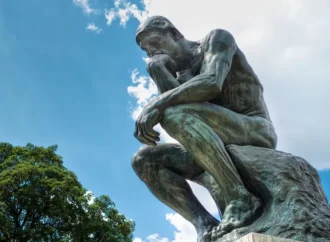
Image credit: Flickr-Slices of Light, CC BY-NC-ND 2.0




















Leave a Comment
Your email address will not be published. Required fields are marked with *