
I’ve spent many happy hours volunteering in a program for inner-city children in Minneapolis since I was a teen. One of my tasks over the years has been helping these children with writing.
There we sit, side by side, with me writing outlines and sentences, while they earnestly race to copy my example. Some get frustrated by their slow pace, while others write with a speed that nearly gives me hand cramps in trying to stay a step ahead.
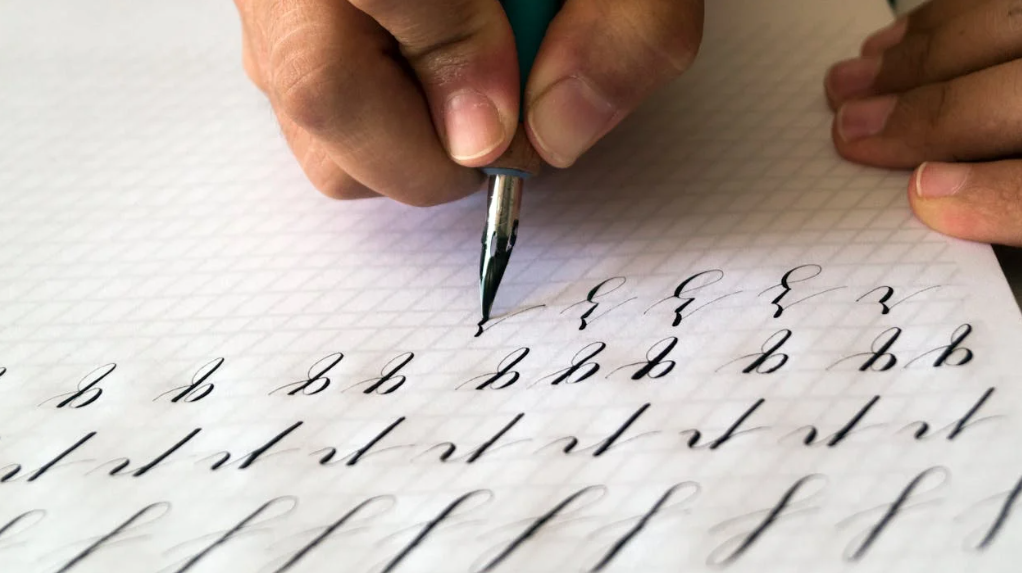
Occasionally, I’ve slipped into using cursive. This fascinates the kids, and they often try copying it or comment on how they wish they could write like that. They sense that cursive is something special — a secret code into which they would like to gain insight, but sadly aren’t currently learning.
That could change in Minnesota thanks to state Sen. Ann Rest, who is seeking to pass legislation to bring cursive back to schools. As the Minnesota Star Tribune recently reported, Rest wants to see a cursive revival both for nostalgic and historical reasons, noting handwriting’s importance to reading our nation’s founding documents.
Yet Rest goes beyond the traditional, more emotionally oriented arguments for cursive and raises an intriguing new one: Cursive is all the more essential in an AI world.
Yes, that seems rather unbelievable, especially when AI is speedily disrupting whole industries. How could something so old-fashioned as cursive grow more essential when robots are taking over the world? Three reasons come to mind.
Cursive Teaches a Sense of Identity
First, cursive sets students apart from the masses. This is especially true now, when so few schools teach penmanship, but it would still be true if cursive instruction returned to the classroom as a regular feature. Penmanship fosters uniqueness, allowing children to create an identity and style all their own.
In recent years, fostering identity in children has generated a lot of controversy, particularly as some of the pathways toward it can create irreversible and detrimental changes to a child’s mental and physical well-being. The fight between the left and right over transgender kids is a case in point.
Cursive doesn’t do that, however. It gives children a chance to express themselves but does so in a way that may actually prosper their future without risking lasting pain.
Cursive as an Antidote to AI
Second, cursive gets students to focus on their humanity. In the past several decades, the education system convinced us that proper learning can’t happen unless children have technology to further their learning. Parents and experts are realizing that this is simply not true — and in fact the opposite may be the case.
Cursive can aid in a healthy retreat from this detrimental reliance on technology for it forces children to slow down, let their brains process and consider ideas, and then actually produce their own thoughts and responses. In the process, they will likely retain more of what they learn, enabling them to file through their own brains for facts and knowledge rather than always turning to Google for the answer.
It’s Good for the Soul
Finally, cursive, with all its swirls and loops, teaches children to recognize and focus on beauty. As philosopher Roger Scruton tells us in “Beauty: A Very Short Introduction,” those who focus on beauty also get a chance to focus on the health of their souls:
Nobody who is alert to beauty, therefore, is without the concept of redemption — of a final transcendence of mortal disorder into a ‘kingdom of ends.’ In an age of declining faith art bears enduring witness to the spiritual hunger and immortal longings of our species. Hence aesthetic education matters more today than at any previous period in history.
We’re certainly in an age of declining faith. But are we better off without it? Anecdotal and data-driven evidence indicate that Americans are more depressed and lonely than ever before, suggesting that ditching faith isn’t the panacea we’ve been told.
Thus, if faith leads us away from depression and loneliness, and beauty leads us back to faith, and cursive leads us back to beauty, then this simple proposal to reinstate cursive in the classroom may have far more positive ramifications than many envision.
A meandering, backward road? Perhaps. But as C.S. Lewis said, sometimes the most progressive among us are those who look to the old paths, recognize their value and do an about-face in their direction.
—
This article is republished with permission from the Minnesota Star Tribune.
Image credit: Pexels























Leave a Comment
Your email address will not be published. Required fields are marked with *