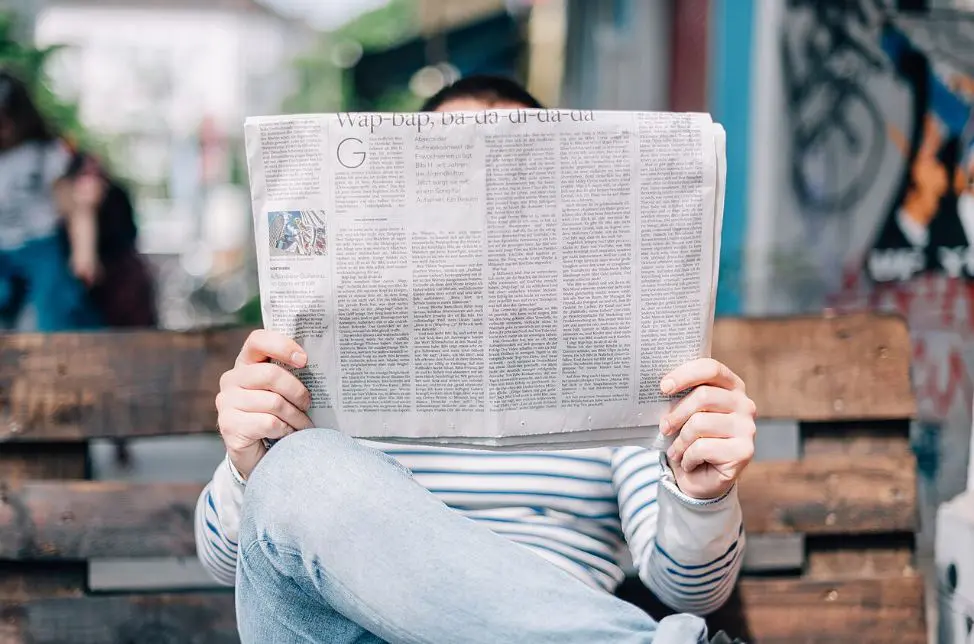
A 400-word wall is a figure of speech used to designate attention span while reading. Ninety seconds is roughly the time it takes the average reader to get through 400 words. Conditioned as many are to distraction and shorter attention spans today, once people hit that wall they find themselves wanting to break away from the text, looking for some new amusement. The 400-word wall explains why many of today’s college students, even at elite universities, find it challenging to read books.
Writer and editor Mary Harrington’s interview with James Marriott, author of “The New Dark Ages: The Death of Reading and the Dawn of the Post-Literate Society,” examines the 400-word wall in depth. Marriott makes clear that a post-literate society doesn’t mean that people can’t read, but that they can’t read with the understanding and patience of earlier generations.
He rightly declares that this sort of literacy peaked at the beginning of the 20th century, then began a decline hastened by technology, first cinema and television and now digital media. He also credits the conversion of mass printing and soaring rates of literacy in the 18th and 19th centuries with producing both the growth of democracy and the West’s leap ahead of the rest of the world in the sciences and technology, and wonders whether a post-literate culture can sustain these endeavors.
We don’t have to agree with everything Marriott serves up to find some valuable takeaways from his central thesis. He blames Donald Trump and the political right, for instance, for the rise of the post-literate society via online news and social media without once addressing the slanted state of corporate news that helped birth this phenomenon. He openly, and with unintended humor, states that conservatives are ignorant compared to liberals. While decrying the state of literacy, he gives little attention to the shift away from the aims of a 19th-century classical liberal arts education to the utilitarian education promoted since then.
Marriott also strikes me as being off base with his insistent comparison of our present situation and the future to the Middle Ages, where an enlightened few lived surrounded by masses of the ignorant. In an “An Art of Manliness” podcast, Marriott’s interviewer goes even deeper into time by comparing our preference for images over text to pre-Homeric Greece. The truth is, the future may hold something utterly new, both frightening and intriguing, just as the Gutenberg press shook the foundations of the world.
But one of Marrott’s comments brought me up short: “I don’t think communications revolutions get reversed.”
Many scholars and theologians once laid out a variety of charges against the printing press, including the complaint that it would vulgarize thinking and corrupt public morals. Five hundred years later, many lodged these same accusations against television, famously described by then-chairman of the Federal Communications Commission Newton Minow as “a vast wasteland.” Today we hear critics of screens and social media making near-identical points. The permanence of these upheavals confirms Marriott’s point: we will not be going backwards and getting rid of our devices.
Consequently, Marriott warns that the move away from a literate culture and our diminished ability to tackle serious texts comes freighted with ramifications seen in our politics and how we think and reason. Marriott remains pessimistic about the future if we continue on our present course, which he believes likely.
Looking at today’s culture, I reluctantly agree with Marriott’s thesis, yet I also see a bit of hope. Rather than trying to second-guess the future, or issuing jeremiads about this decline of a literate culture, it seems to me that those who want to read the great books and classics have only themselves standing in the way of that ambition. Necessity forces us to engage the digital world that has swallowed us up, but we can also read books. Furthermore, we can pass along our love of books to our children by way of teaching and example, and when possible, encourage others to spend time with a good book rather than wasting hours a day scrolling TikTok.
At this particular time, with our enfeebled system of education, a breakdown going back decades, and with our increasing addiction to the machine in the palm of our hand, we should not hold out any false hope that Americans, or the world at large, will suddenly turn off their phones and pick up Plato, Tolstoy, or even James Marriott.
But we can.
—
This article was made possible by The Fred & Rheta Skelton Center for Cultural Renewal, a project of 1819 News.
Image credit:Roman Kraft, CCO
























Leave a Comment
Your email address will not be published. Required fields are marked with *