
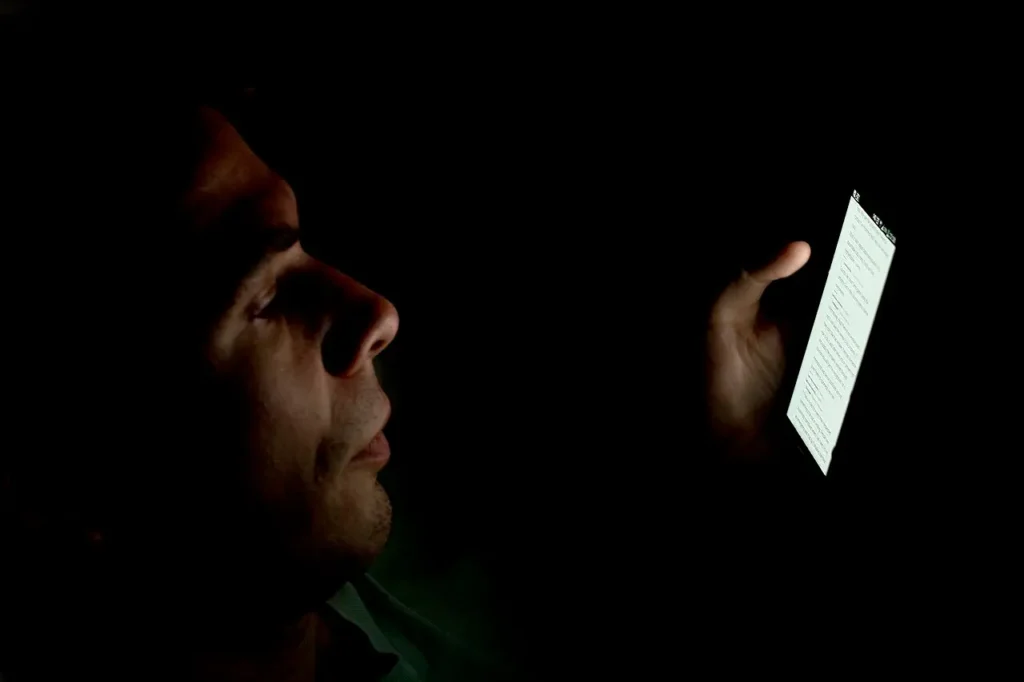
“Our conventional response to all media, namely that it is how they are used that counts, is the numb stance of the technological idiot” wrote Marshall McLuhan in his 1964 book “Understanding Media: The Extensions of Man.” McLuhan is famous for the idea that “the medium is the message,” or the way a message is presented has at least as much impact, if not more, than the message itself. If McLuhan’s claim is true, then technologies, specifically communication technologies, are never completely neutral. They act upon us as much as we act upon them.
To understand McLuhan’s basic claim better – and how it applies to the internet and AI – it’s helpful to look at a historical precedent: the printing press.
It’s commonly observed that the emergence of printing technology in the 15th century fundamentally reconfigured European society. It affected and restructured religion, politics, philosophy, science, and culture largely because it restructured our very patterns of thought.
The rationalism that emerged in the Enlightenment just a few centuries later originated partly in the highly structured, systematic, and linear medium of print – suddenly widely available for the first time in the 15th century – which molded men’s minds to think in structured, systematic, and linear ways. The new, mechanistic understanding of the universe that emerged with the scientific revolution of the 16th and 17th centuries likely also had a hidden impulse in the predictable, repeatable, and mechanical functioning of the printing press.
The printing press, of course, also reshaped the reader’s relationship to other readers. “[I]t is the medium that shapes and controls the scale and form of human association and action,” McLuhan said. The connection between widespread printing-press-induced literacy and individualism isn’t difficult to see. Whereas, in the past, theological or scientific knowledge was largely shared orally, in group settings, knowledge became suddenly available to every individual to study and reflect upon privately after the printing press.
So the printing press altered the form of human association because the transmission of knowledge and wisdom became less social and more individual (although, at the same time, the press connected people across distances in an unprecedented way).
Before the printing press, knowledge was communal and hierarchical. Theology was passed to individual believers through the church and its hierarchy. Believers encountered Scripture through the witness of others, through public readings, or through shared artwork in public spaces, not directly and privately by reading the Bible on their own. It’s no great surprise, then, that Luther and a large swath of Europe would begin insisting on an individualized form of Christianity while rejecting the communal and corporate form found in the Catholic Church.
These historical chains of cause and effect are easier to see and analyze than changes taking place right now. Yet we’re in the middle of a medium-based revolution of human society that will have even more dramatic consequences.
The introduction of the internet and AI is rewiring our brains and our society. From fragmented attention spans to dopamine addiction, the psychological effects are well-documented.
On the social and communal side, the internet was supposed to connect the globe, but has instead accelerated the atomization of society. The reason is that it takes the individualization and privatization of knowledge introduced by the printing press and pushes it much, much further. Today, it is possible to gain access to any kind of information on any subject or event anywhere in the world instantaneously without having to talk to another human.
In prior oral cultures and even, to a lesser extent, print cultures, abstract knowledge was communal and hierarchical, filtered to the individual through a series of layers, intermediaries, and gatekeepers, whereas practical, hands-on sensory knowledge was direct and immediate.
The internet reversed this order. Now, there are fewer cultural institutions or communal checks on what abstract or intangible knowledge we can acquire and in what form (including whether it’s even true or not). Glued to our screens, we have less direct knowledge of the physical, hands-on world than ever. Everything physical is filtered through the intermediary of the screen, depriving us of the most basic forms of grounded thought and action. Meanwhile, everything intellectual is laid before the user with no checks or guards, available instantly to any individual, even if he or she lacks the discernment to make good use of that infinite swath of information. Truth is no longer culturally embedded or culturally contextualized – it is all radically self-determined.
The net result is that it’s easier than ever for individuals to construct their own, private “truths.” The fact that most internet sites now run on complicated algorithms that predict what content you want to see only exacerbates the problem. We are all living in our private digital worlds, a warped reflection of reality. They’re custom made by algorithms to stroke our egos, satisfy our desires, and reaffirm our biases.
One wonders whether the internet as it exists now is primarily a source of information or primarily a source of self-medicating hypnosis. The sobering result, I think, is that many of us genuinely live in a false reality, while fewer and fewer of us share together in the real, common reality.
Moreover, the binary nature of digital technology and communication seems to have imprinted itself on our collective way of thinking: we see issues as black and white, with little nuance, and they increasingly polarize us. We condemn opponents as evil and allies as good, while rage-bait and clickbait encourage this simplistic thinking.
The private, individualized internet experience and its shallow, binary content leads to division and political polarization, and we no longer share a common world with anyone. And the more people look out on a turbid sea of conflicting information, AI fabrications, and radically divergent, digitally-mediated experiences of the world, the more they will despair of finding any sure ground on which to stand.
I don’t think it’s an exaggeration to say that digital media is leading us toward a mass, hallucinatory psychosis. There’s a real danger that each of us be lost in the swirl of confusion, of too much information coming too quickly, dreaming our private dream of a world no one else would even recognize, and losing more and more touchpoints with reality, with the actual ground beneath our feet and our neighbors’ feet.
—
This article was made possible by The Fred & Rheta Skelton Center for Cultural Renewal.
Image credit:Japanexperterna.se, CC BY-SA 2.0























Leave a Comment
Your email address will not be published. Required fields are marked with *