
“Leadership and the Liberal Arts: An Education to Last a Lifetime” is a collection of essays written by faculty, administrators, and others from Westmont College, a top-level Christian liberal arts school in Santa Barbara, Calif. The book aims to make the case for liberal arts, or what some might call a classic education.
This is the sort of book which, after finishing the introduction and the first few chapters, the reader feels free to skip around through the rest of the book, selecting chapters out of personal interest. Chapters I’ve enjoyed include “Grammar, Logic, Rhetoric, and Ethics,” “The Creative Arts as Formative Arts,” and “Bringing Learning to Life.” In them, the authors demonstrate not only their expertise in a given field but connect the subject matter to the students they encounter daily.
Two ideas came to me while reading. The first has to do with Scripture and theology. The Bible is clearly at the core of this institution and what it teaches, and throughout the book we find discussions of faith which summon the likes of Augustine, Aquinas, and the early church fathers.
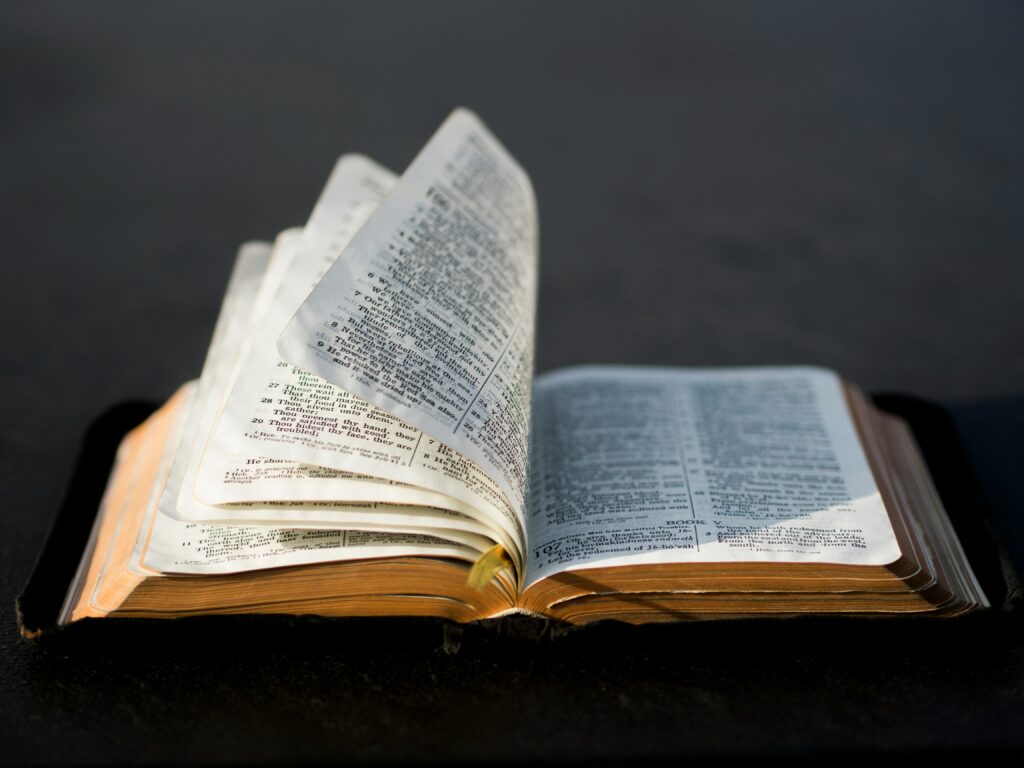
I thought again of how the Bible has largely vanished from government schools and our culture at large, not only as a religious text, but more simply as a document key to our culture. Any attempt at a full understanding of Western civilization which ignores the Bible is necessarily crippled. Dante, Shakespeare, Milton, da Vinci, Michelangelo, our laws, our understanding of morality, our way of governance, and so much more stand atop the foundation of the Old and New Testaments.
Yet for Americans who don’t attend church or religious schools or colleges like Westmont, this cornerstone of their civilization, the chief explanation for its existence, may as well be written in Sanskrit. A decline in church attendance in the last 75 years, the banishment of the Bible from our government schools, and heresies preached in some churches and theology departments have surely contributed to today’s moral confusion.
I then turned to reading the chapter on the value of the liberal arts, a subject near and dear to my heart. We’ve seen certain university departments, like philosophy, literature, and history, abandoned by students in catastrophic numbers. Often the subject matter is blamed, yet the real culprit is the ideological biases with which those subjects are taught. No young admirer of Shakespeare, Jane Austen, or Ernest Hemingway wants to sit in classes where their literary idols and their works are deconstructed into dust.
Moreover, many critics, including many parents, have attacked the liberal arts as useless to real life and a career. Again, the worth of a liberal arts education depends on how it is taught. All four of my children attended a Catholic liberal arts institution, Christendom College, with an enrollment of no more than 500 students. All four majored in philosophy, and all four are making their way in the world, enjoying good incomes and healthy marriages and families.
Christendom, Westmont, and scores of other small colleges around the country are graduating students who are better equipped to face a changing world than many of their peers. As the book’s conclusion notes:
Peter Drucker, the father of modern management, once observed that a liberal arts education provides the best possible preparation because it teaches us how to take discrete areas of knowledge and place them into a meaningful whole. The liberal arts teach us how to think. They teach us an approach to learning that invites us to see the interrelationship of all knowledge.
He goes on to say that the liberal arts allow us to “discover the wide, vast universe of human knowledge. This recognition invites a lifetime of learning.”
This curriculum of liberal arts starts with fairy tales and Aesop’s fables for the young ones. As they mature, it’s a curriculum that teaches great literature, history, mathematics, and sciences. It guides the student from the Jerusalem of David and Solomon and the Athens of Socrates and Plato right up to our own day, endowing them with a deep appreciation of Western civilization, while bestowing skills like composition and critical thinking.
The world of the 21st century is rapidly becoming ever more complicated in its politics, technology, finance, and more. A Christian liberal arts education offers its students and practitioners the compass and maps with which to navigate the rough seas and storms of this uncertain present and unpredictable future.
—
This article was made possible by The Fred & Rheta Skelton Center for Cultural Renewal.
Image credit: Unsplash
























Leave a Comment
Your email address will not be published. Required fields are marked with *