
Every year, news commentators from across the political spectrum decry the fallen state of American education. The tripod once known as reading, ‘riting, and ‘rithmatic is still crucial to all learning, yet survey after survey, test after test, reveals dismal results in student performance.
Following the release of this data comes the finger pointing. Universities blame secondary schools for students’ inabilities to read through a novel. Other critics point to the obsession of young people with their phones and screens. Parents blame teachers and vice versa.
Meanwhile, our schools just keep cranking out hordes of students ill-equipped for life, work, and success. Their declining skills in reading, math, composition, and American history aren’t fleeting problems that will solve themselves, but portend a decline in our country itself.
And this is where parents must step up and take responsibility for seeing that their children receive an education as well as a degree, a quest that begins in elementary school. Here are ways to help make that goal a reality.
Trust But Verify
Every parent should adopt Ronald Reagan’s famous line – “Trust but verify” – when it comes to their children’s education. Many parents send their elementary school kids out the door every morning believing that they’re being educated (at both public and private schools), but without keeping track of their progress. The days turn into weeks and months and they realize too late that their third-grader can’t read Dr. Seuss or that their fifth-grader doesn’t know that 8×8 is 64.
The Overall Plan
Busy parents need as few additional commitments as possible. To verify – and help strengthen what their children are learning – sounds like one more burden, but here’s a simple method for keeping on top of the kids’ progress without stressing.
Sunday evenings usually find families pointed toward school on Monday. Take 15 minutes from that evening and use it to check your children’s academics using the suggestions below while at the same time reinforcing what they’ve learned. On Monday through Thursday evenings, do the same. Establish this routine now, and these scheduled get-togethers will seem natural by the time the kids reach middle school.
The Daily Rounds
Below is just one example of making the most of these short assessments. Remember, you should spend no more than 15 minutes per session.
Sunday and Tuesday sessions: Have your child read aloud to you from the reader used in the classroom. If they’re in the upper elementary school, have them read from their history or science text. What they read to you in these exercises matters less than whether they can read. Are they comfortable with the vocabulary? Do they comprehend what they’re reading? If so, then they’re mastering grade-level requirements.
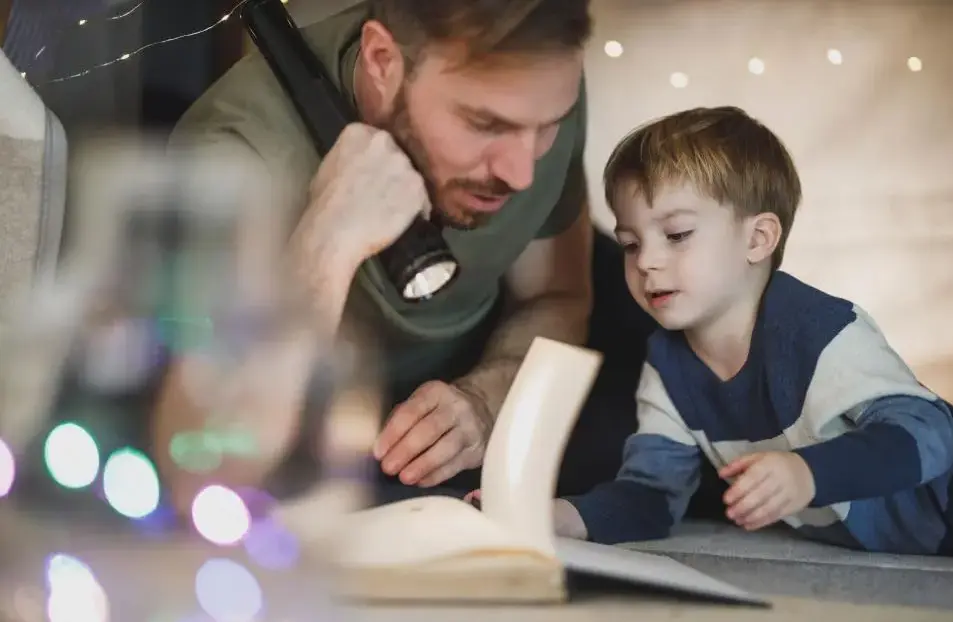
If they’re kindergartners or first-graders just learning to read, then read aloud not only to them, but with them, meaning having them sit beside you so they can see the words on the page. If you’re in the habit of reading to them at bedtime, continue to do that as well. These read-aloud times are a vital part of a child’s education.
Monday and Wednesday sessions: Look over the student’s written math homework and tests. Ask them to solve problems based on that work. Quiz them a bit. As with reading, you’ll likely be amazed at how much can be taught, learned, and reviewed in 15 minutes.
Thursday session: Have the younger ones, K-3 perhaps, write a note to a grandparent or friend, dictating to you if need be. Then mail that note. Posting the note is crucial, as it tells the child without further explanation that writing is a powerful tool with consequences.
Have the older ones do the same. Writing by hand is preferable, but let them use a keyboard and emails from time to time if they wish.
If these evening exercises reveal a problem – difficulty with spelling, for instance – then adjust the schedule. Take one of the math evenings and devote it instead to spelling until the student is caught up.
Ties That Benefit and Bind
To stay within the 15-minute time constraint, teamwork is necessary in larger families. Ideally, mom and dad can both take a hand in these tutorials. If more tutors are needed, have an older child, a sixth-grader or middle schooler, do the reading with the third-grader in loco parentis while you help the beginning reader. Have the third-grader go over simple math exercises with the second-grader while you help the sixth-grader understand negative numbers. These assignments offer the older students a chance for review and a taste for teaching.
Whatever the number of children, adopting this strategy, or one of your own design, not only ensures your children don’t fall behind in school, but strengthens family ties. Your interest and participation tells your children that you are on their side, an ally in their learning rather than a nag, a coach rather than an apathetic bystander. And by starting in the early grades, you’ve created a pathway of help that can extend through the high school years.
Join hands with your child in their learning, walk with them, and you’re uniting your hearts as well.
—
This article was made possible by The Fred & Rheta Skelton Center for Cultural Renewal, a project of 1819 News.
Image credit: Freerange Stock

























Leave a Comment
Your email address will not be published. Required fields are marked with *