Recently I watched my two-and-a-half-year-old granddaughter at play. She toddled up and down the side porch, stopping to eat a bite of the apple slice her mother had given her, fingering some Play-Mobile figurines, pausing to gaze out across the small side yard. She’s a bright kid with a large vocabulary, compliments of her seven older siblings.
Fortunately, that ever-expanding dictionary doesn’t yet include the expletives that I hear daily from teens and adults walking past my porch. As they did with their other children, her parents carefully monitor any shows she watches on television.
Watching her – the yellow dress she was wearing made me think of a walking daffodil – I thought of an Institute for Families Studies article I’d recently read in which Ashley McGuire rightly blasts America’s wide-open culture of sex in advertising, movies, sporting events, and other entertainments. Our public spaces from airplanes to stadiums to libraries, she writes, “all seem to have been transformed into spaces only suitable for adults—adults who are comfortable with raunchy, explicit, and violent content, at that.”
By way of example, McGuire lists several public events that are “showcases for freak sexual content,” like the Super Bowl halftime show with “Bad Bunny, who wears dresses and routinely features occult content” along with events like a Coldplay concert with “Chris Martin’s endless profanity.”
McGuire asks, “When did we decide as a society that children no longer have a right to their innocence?” She then answers the question: “I don’t think we ever really decided that making the public square an R-rated nightmare for families to navigate was acceptable. We slid into it and let corporate priorities and base adult consumer demand take the wheel.”
Odds are that the innocence of that little daffodil on my porch will fade sooner than it should. She’ll hear the language of those people on the street or from some friend whose parents are less careful about the movies their children watch. Because of certain books our public libraries promote these days, she’ll someday learn that two daddies somehow equal mom and dad. She’ll learn to read and decipher the F-word on T-shirts, political signs, and walls.
McGuire focuses her article on the damage done to the innocence of children, to family life, and to a wholesome public arena by our culture’s dive into a swamp of sex and what was once regarded as gutter language, but these murky waters conceal broader ramifications. As we celebrate our 250th birthday as a nation this year, and if we consider our hyper-sexualized culture and now common obscenities as vices rather than virtues, then we should also consider the damage being done to our republic.
Again and again, the men who signed the Declaration of Independence and devised the Constitution tied the survival of the republic they’d founded to a virtuous citizenry. By now, many Americans have read the famous warning of John Adams that appears frequently online: “Our Constitution was made only for a moral and religious people. It is wholly inadequate to the government of any other.”
We should be aware as well that many other American founders made this same connection. In a 1787 letter, for instance, Ben Franklin said, “Only a virtuous people are capable of freedom.”
In his 1796 Farewell Address, George Washington wrote, “Of all the dispositions and habits which lead to political prosperity, religion and morality are indispensable supports. In vain would that man claim the tribute of patriotism, who should labor to subvert these great pillars of human happiness, these firmest props of the duties of men and citizens.”
In a 1783 sermon, Presbyterian minister John Witherspoon, the only clergyman to sign the Declaration, declared, “I hope none here will deny, that the manners of the people in general are of the utmost moment to the stability of any civil society. When the body of a people are altogether corrupt in their manners, the government is ripe for dissolution.”
Unless some Orwellian slogan like “vice is virtue” is concocted, we would be hard put to designate American culture as virtuous. The scandals brought to light of widespread fraud involving government monies, the attacks on patriotism and the American past, and our bitter ideological divisions lack even the façade of good character.
Some want to “Make America Great Again,” but to accomplish that worthy goal we must first of all make America virtuous again.
That transformation begins with each one of us. Like McGuire, we can do our best to protect our children from the culture’s penchant for vice. We can establish boundaries within ourselves to prevent that deviancy from influencing us. We can try to live with integrity. As McGuire concludes, “It starts with stepping back and deciding that we never agreed to make exposing children (or anyone else) to explicit content a prerequisite for stepping foot outside our house.”
—
This article was made possible by The Fred & Rheta Skelton Center for Cultural Renewal.
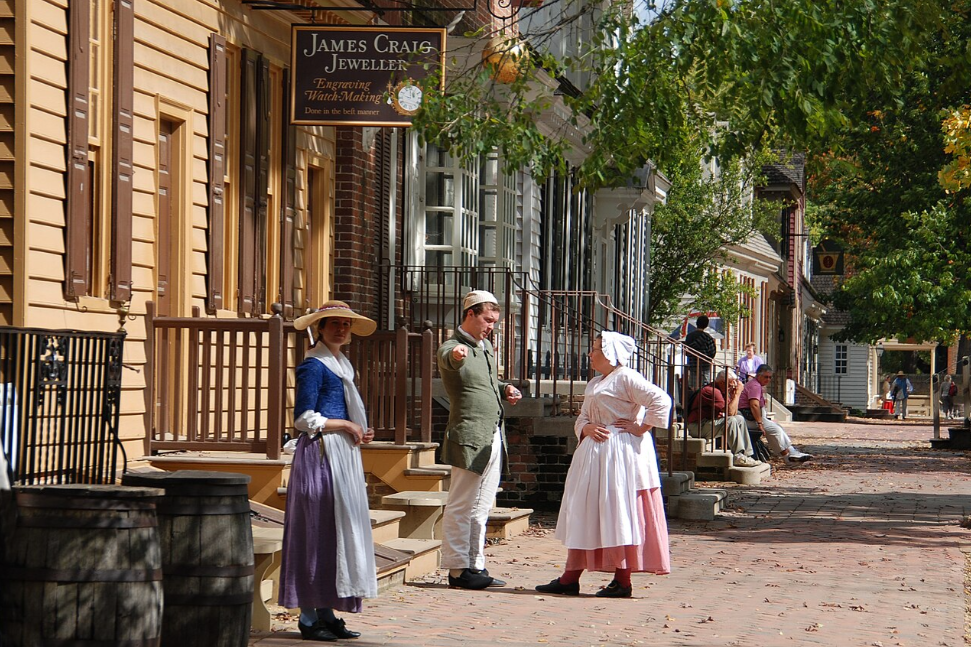
Image Credit: Joe Ross, CC BY-SA 2.0