

This time of year brings the temptation for many to lose hope. It would be simplistic to point to election results, but combined with the waning daytime hours, colder weather, and loneliness that the holiday season can intensify, one can easily recognize the potential for despair beyond political realms.
Pagan Origins
Hope, by its nature, was difficult for ancient peoples because of their assumptions about reality. The prevailing power, a power even greater than the gods, was that of Fate. Humans of the ancient world could not rely on hope because everything was already predestined and unchangeable. What is the point of hope when the future has already been decided?
This pagan view of reality largely contributed to the popularity of the apathetic resignation of stoicism, a philosophy that responded to Fate by acquiescing to it in order to feel in control. If Fate always has the final say, then it makes sense to take back the little agency possible to an individual. However, this philosophy does not allow for hope, because hope must be found in something outside of the present self. Hope, by its nature, is found in the future.
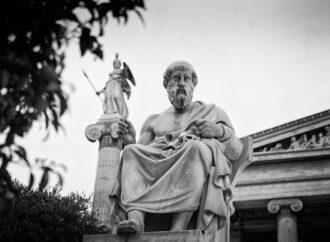
Writing before the advent of Christianity, Aristotle did not consider hope a “virtue” in the way he discussed the other moral virtues in his “Nicomachean Ethics.” For Aristotle, to hope was still not a choice or a habit in the same way performing a just or prudent action was. Hope was merely a sense of expectation for some future good. Even so, the ancient person was entirely subject to the whims of Fate.
Christian Development
It was not until Christianity popularized the concept of providence that one could begin to reasonably choose to hope. This is most notably discussed in the influential “On the Consolation of Philosophy” by Boethius, which views providence as the usurpation of Fate by God’s will, which Romans 8:28 says “works for the good” at all times, giving the Christian something to hope for. In order for the Christian to hope for something in the future, that God’s will of the good will prevail, the Christian must trust in God’s goodness in the present.
The virtue of hope depends upon faith, or trust in God. Both faith and hope are theological virtues, meaning that God gave them to humanity directly. While it is possible to have faith in natural realities (one reasonably believes that one’s spouse loves them) and hope for natural things (one can hope for a certain sports or political result), examples of natural faith or natural hope rely upon an assumption of goodness, understood by Christians as a manifestation of God’s providence.
Corruptions of Hope
Because hope is a virtue, choosing to hope is a matter of the will. In other words, we can reject hope. The choice not to hope takes two distinct and different forms. The first is despair, which goes beyond the feeling that things are difficult or the feeling that things will not get better. Despair is the choice to not act towards the good because one considers those actions to be pointless.
The other side is an excess of hope, which is called presumption. This seems strange at first because it seems like one cannot hope for a good outcome too much. However, as with despair, presumption is not just about a feeling, but an action or inaction. The problem with presumption is that one expects a good outcome without action, so none is taken. Like despair, presumption depends upon a lack of action toward the good for which one is supposed to hope.
Reality Determines Hope
Both the corruptions of hope described above, its defect and its excess, revert to the ancient pagan view of reality governed by Fate. When one fails to act toward the good, one abdicates his free will. The difficulty is that hope must build upon a faith that is already present. One cannot reasonably hope in a future good without first trusting in a present, transcendent good, namely God Himself. In order to hope, we must accept God himself as supreme goodness, the height of our aspirations of hope.
—
This article was made possible by The Fred & Rheta Skelton Center for Cultural Renewal.
Image credit: Unsplash




















Leave a Comment
Your email address will not be published. Required fields are marked with *