
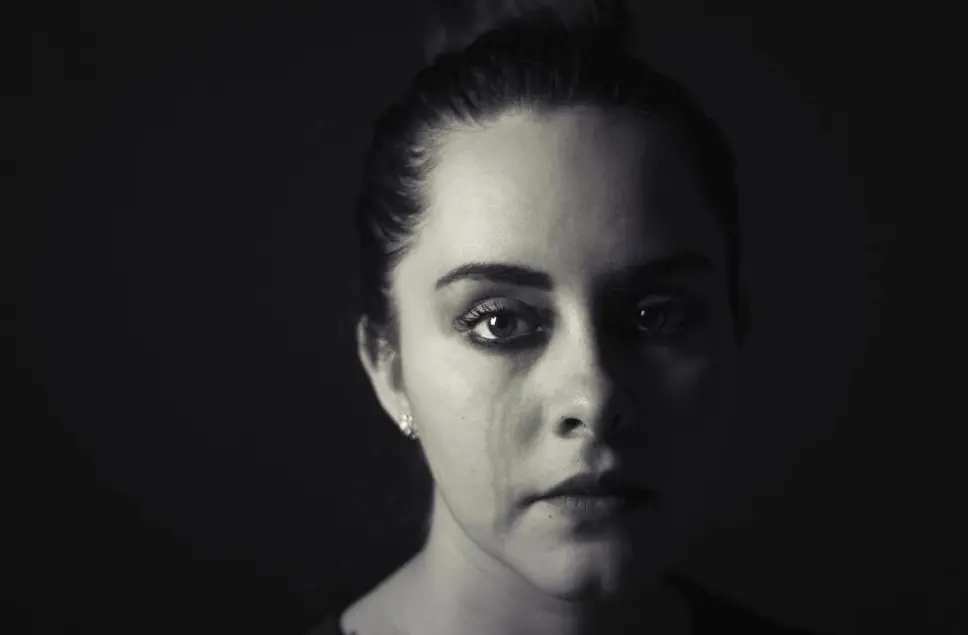
Were my wife alive today, she would tell you that the tears of women I admire or love sometimes move me into action.
Here’s one example. Back in the early 1990s, constantly in debt, we decided to sell the bed and breakfast we’d bought, renovated, and operated in North Carolina. Kris loved the place, which was our home as well as our business, but the smart move was to sell and start anew.
The real estate agent arrived with the papers giving his agency permission to show the property. We met in the kitchen, listening as he went over the terms of the contract, but when the time came to sign, Kris disappeared. I excused myself, walked down the hallway, and found her in the far corner of the living room, weeping silently by a window. She looked at me without saying a word, and those tears were the end of the deal.
“I don’t think we’ll be signing any papers today,” I told the agent. “I’m sorry for your trouble.” He left, not especially happy, and we kept the B&B, our home, and our headaches until Kris’ death 12 years later.
A much more recent example sparked this column. I ran across a War on Beauty podcast, “Art Terrorism,” with Julia Davis, a lover of beauty and a critic of its fallen state in contemporary culture whom I interviewed in September. I clicked on the podcast, posted just six hours earlier.
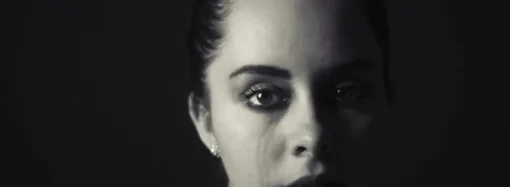
I was stunned. Here was this bright, brave, and vivacious young woman who repeatedly defended beauty in her podcasts and in our phone conversation, often a lone warrior against the ugliness of the times, now broken and red-faced from crying. She had just returned home from a visit to the Jeffrey Deitch Gallery in Los Angeles and a showing of the works of Kiki Smith. Her splotched cheeks, reddened eyes, and choked voice revealed a woman who had wept for some time before producing the podcast.
The cause of these tears? “So I opened up the door and the first thing I’m greeted with is open-butt cheeks spewing out 50 feet of s*** coming out of a humanlike wax figure on all fours, a naked woman,” she said.
Driven to escape, she entered another room “where I was greeted by what looked like bloodstained walls with corpses hanging from the ceiling.”
In a separate X post, Davis writes of these alleged works of art, “It made me physically ill. … I did not leave more ‘cultured,’ only more aware of the depravity and decline of our arts (which are a reflection of the state of our whole society)….”
These grotesque pieces were never meant for sale, only exhibition in a gallery. Particularly significant, as Davis points out through her tears, is that these works are from the 1990s. This was a retrospective, not a new exhibition, which means that for more than 30 years these have existed as “works of art,” perhaps influencing others.
Just as my wife wept over the loss of the home she loved, so Davis weeps brokenheartedly for this savage attack on art and beauty which she so often defends. Her love for beauty, both in the natural world and the arts, comes from an adolescence spent in many museums and a degree in art history from the University of California, including a stint in London’s Sotheby’s Program for “art business.” Her chief interest then was in modernism and 20 century art.
All that changed during the Covid pandemic. As she told me during our interview:
My father was Jewish, and my mother was born and baptized Catholic, but I was raised sort of culturally Jewish and didn’t believe in God. But around COVID-19, my mom took me to a Bible study. For the first time, learning about God and prayer, I started to see there was a huge erasure of beauty not just in art, but really in our everyday experiences. It struck me that this is that thing I originally connected to as a child in a museum. It was the beauty that hit me and that I loved.
This beauty carried her into Christianity and Catholicism, and into a deeper and more traditional appreciation of beauty itself, not only in the plastic arts but in the ways that our dress, speech, and behavior can make us more fully human – when degraded, less so.
In his 1998 encyclical “Fides et Ratio,” Latin for “Faith and Reason,” Pope John Paul II wrote, “Wherever men and women discover a call to the absolute and transcendent, the metaphysical dimension of reality opens up before them: in truth, in beauty, in moral values, in other persons, in being itself, in God.” Davis is one who discovered that call and who weeps because she recognized that art can be a nauseating act of murder committed against the transcendentals of truth, goodness, and beauty.
Davis has mentioned that the power of prayer helped bring her to this place. Faced by the ugliness of our art these days, and the equally ugly fallout looming ahead as a consequence of the recent midterms and our broken culture in general, we should join her in prayer and in doing whatever we can to restore true beauty in our own lives.
—
This article was made possible by The Fred & Rheta Skelton Center for Cultural Renewal.
Image credit: Pexels

















Leave a Comment
Your email address will not be published. Required fields are marked with *