
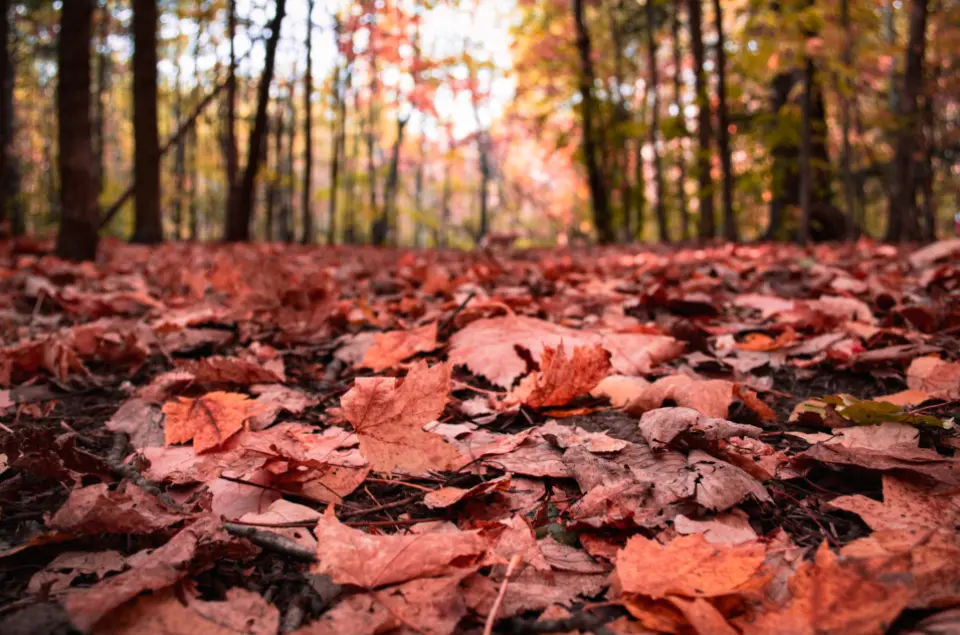
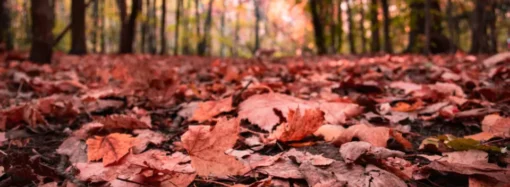
In the fall, trees draw all the nutrients from their leaves down into the trunk and earth-enmeshed roots, saving sustenance for the winter ahead. As the tree sucks in the lively green chlorophyll from its leaves, the underlying carotenoids become visible in the flaming yellows, oranges, reds, and browns of the autumn canopies. Then the wind dries out the leaves, and they fall and crackle into dust in your hands or beneath your shoes.
Autumn reminds us of the necessity of memory. We must gather ourselves up like the trees, storing the nectar of memory and preparing for the cold, featureless corridors of winter.
Like the cerulean sky it brings, autumn produces an almost painful clarity to the mind. The vibrant technicolor sky, the brisk temperatures, the drop in humidity and air pollutants – all this awakens us, calling us to focus, remember, and prepare. There’s something about a season of endings that forces retrospection. It’s hard to describe, but something is afoot; your nerves are atingle; you can almost taste an incense in the air or catch the strains of a voice rattling through the trees.
“Do not forget. Do not forget.”
Do not forget what?
Your death, I suppose. In the northern hemisphere, the seasonal decay of the pageantry of summer, the way the earth shudders as the gilded foliage fades and fruits begin to rot, certainly reminds us of that. Our bodies are of the same stuff as the world around us, in which each tree, plant, animal, and season has its appointed time.
It is no wonder that the traditional Christian calendar marks November as the month to remember. We remember the deaths of others, not just our own. All the deaths of people close to me occurred in the autumn, which makes remembering them all the more prescient this time of year. My prayers for them intermingle and jumble in my mind with memories of their faces, their laughter, and their funerals.
This is not morbidity. If love means anything at all, it means a commitment that endures beyond the grave. It means remembering even when remembering hurts. The greater the sacrifice, the greater the honor we pay to the dead. Cultures throughout the world have understood the importance of retaining the memory of the deceased to honor and imitate the good they did and to weep for the evil. That is part of what it means to be in society. We inherit the dead, for better or worse, and it is a responsibility we cannot shirk, at the risk of cultural suicide, familiar betrayal, and personal amnesia.
There are other kinds of deaths, too, that autumn brings to mind: the psychological and spiritual deaths of suffering, conflict, and disappointment. Novelist Sigrid Undset put her finger on it in this passage from “Kristin Lavransdatter”:
[I]t occurred to Kristin Lavransdatter in a new way that the interpreters of God’s words were right. Life on this earth was irredeemably tainted by strife; in this world, wherever people mingled, producing new descendants, allowing themselves to be drawn together by physical love and loving their own flesh, sorrows of the heart and broken expectations were bound to occur as surely as the frost appears in the autumn. Both life and death would separate friends in the end, as surely as the winter separates the tree from its leaves.
This broadens our scope beyond our own personal affairs to something more universal, the common lot of struggle and pain in all humanity. The decline of autumn recalls to us the brokenness of the human story writ large.
As hard as these remembrances may be, they’re necessary and wholesome, helping us live more soberly, more humbly, and even a little more gratefully. Paradoxically, the decay of autumn and its accompanying acknowledgement of mortality actually invigorate us, bringing an influx of life. We live more fully when we live honestly, reckoning with the reality that time passes swiftly, and so the good that comes to hand today must not be left undone, the words of love that rise to the lips today must not be left unspoken.
Moreover, the seasons are cyclical, and so even in the embers of autumn there’s a faint reminder of the flame that will burst forth again in spring. A beautiful passage from Homer in “The Iliad” articulates how both mortality and hope are interwoven with the seasons:
As is the generation of leaves, so is that of humanity.
The wind scatters the leaves on the ground, but the live timber
burgeons with leaves again in the season of spring returning.
So one generation of men will grow while another dies.
By remembering these truths, we may seize the opportunity to make new memories of beauty and goodness, both for ourselves and for those who come after. Therefore, when it is our turn to burgeon and bloom, we may do so with all the gusto we can. And for those of us with faith, these remembrances impress on us the truth that here we have no lasting city, that we’re pilgrims passing through to a better place, a truer homeland. Above all we remember that the autumn of this life will give way to the spring of Another Life – and that springtime will have no end.
—
This article was made possible by The Fred & Rheta Skelton Center for Cultural Renewal.
Image credit: StockSnap




















Leave a Comment
Your email address will not be published. Required fields are marked with *