
Not so very long ago, school districts and education leaders told us that technology in the classroom was essential to the success of our students. “An iPad on every desk” became the new “chicken in every pot” slogan, as experts tried to convince us that technology could be a panacea for the nation’s test scores.
Well, they convinced us. And now some parents are working to extract their children from this technological bill of goods that we were sold.
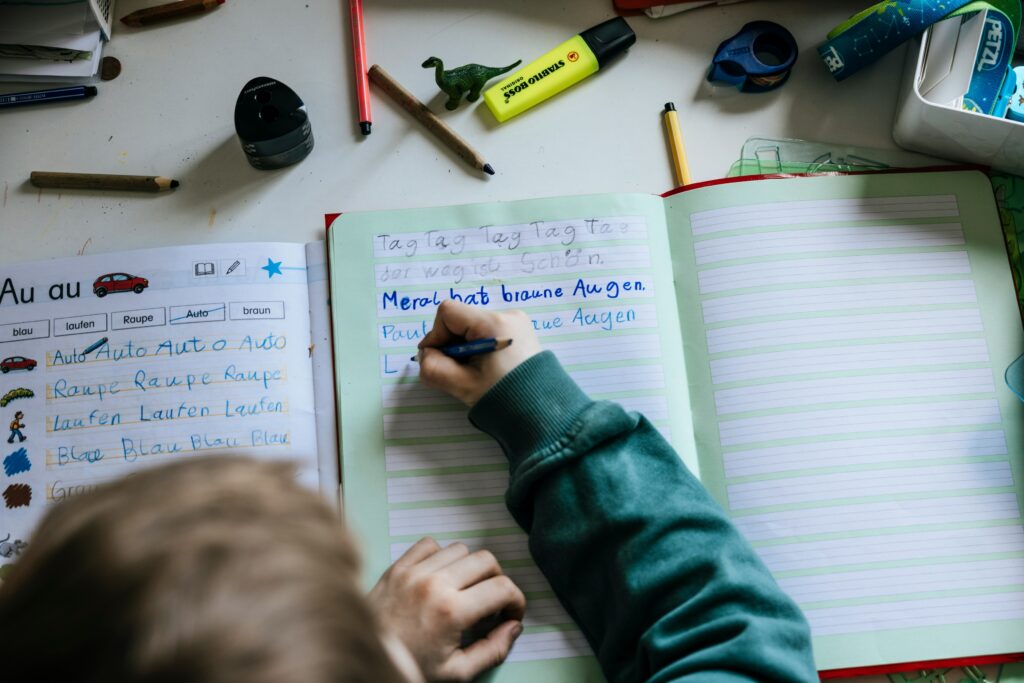
According to NBC News, parents like Julie Frumin and Emily Cherkin strongly believe that the heavy presence of technology in the classroom – particularly through Chromebooks and iPads – is harming their children, so much so that they took steps to ensure that their children were instructed in the classroom with physical media such as books, pens, and paper instead. Now other parents are following in their footsteps.
Reasons abound for such a drastic, upstream move. Some parents cite health concerns, as their children get headaches from staring at screens all day. Others seek to eliminate distraction, wanting their children to focus on learning rather than watching videos, shopping online, or even viewing inappropriate content. Growing research on the increased learning retention of hard-copy education over screen-based learning is another factor.
Yet the hidden dangers of technological invasion are also a driving force in this growing parental choice. “I want them to be taught through humans,” Frumin told NBC, highlighting many Americans’ growing concern regarding the explosion of AI-generated academic resources. Other parents hint at the data collection that occurs through a student’s personal classroom device – information that parents don’t want shared with strangers.
These reasons are all good and understandable, yet there is a deeper underlying reason that should cause parents to consider making a similar move in their respective school districts. It can be summed up by the old phrase, “know thyself.”
Consider the following passage from Neil Postman’s famous book, “Amusing Ourselves to Death.”
“Television is our culture’s principal mode of knowing about itself,” Postman writes. “Therefore—and this is the critical point—how television stages the world becomes the model for how the world is properly to be staged.”
In other words children will perceive themselves and their place in society based on the images that their school screens feed them, whether that image be good or bad.
“It is not merely that on the television screen entertainment is the metaphor for all discourse,” Postman continues. “It is that off the screen the same metaphor prevails.”
That metaphor in turn translates into real life, Postman says, corrupting the basic elements of good communication and thought:
In courtrooms, classrooms, operating rooms, board rooms, churches and even airplanes, Americans no longer talk to each other, they entertain each other. They do not exchange ideas; they exchange images. They do not argue with propositions; they argue with good looks, celebrities and commercials.
Although written at a time when television was the major technological force in society, Postman’s words can easily be adapted to the effects of social media, videos, or other online elements. When we train children to be dependent on screens – even in their locus of education – they will not learn to become independent thinkers who can aptly discuss ideas or debate arguments; they will instead be easily propagandized, sucked in by a steady stream of images.
The outcome of such a state, is the death of a culture, a fact Postman explains elsewhere in his book:
When a population becomes distracted by trivia, when cultural life is redefined as a perpetual round of entertainments, when serious public conversation becomes a form of baby-talk, when, in short, a people become an audience and their public business a vaudeville act, then a nation finds itself at risk; a culture-death is a clear possibility.
None of us want to see that cultural death to happen in our country – or in the minds of our children. Rather than fight what goes on the screens our children use in school, as so many have bravely done in recent years, perhaps it’s time to take things a step farther. Instead of plowing ahead with more and more technology incorporated into our school classrooms, is it time to reverse course and go back to the good ol’ fashioned way of instruction and learning?
—
This article was made possible by The Fred & Rheta Skelton Center for Cultural Renewal.
Image credit: Unsplash

























Leave a Comment
Your email address will not be published. Required fields are marked with *