Want to make a millennial woman feel old? Tell her that American Girl is turning 40.
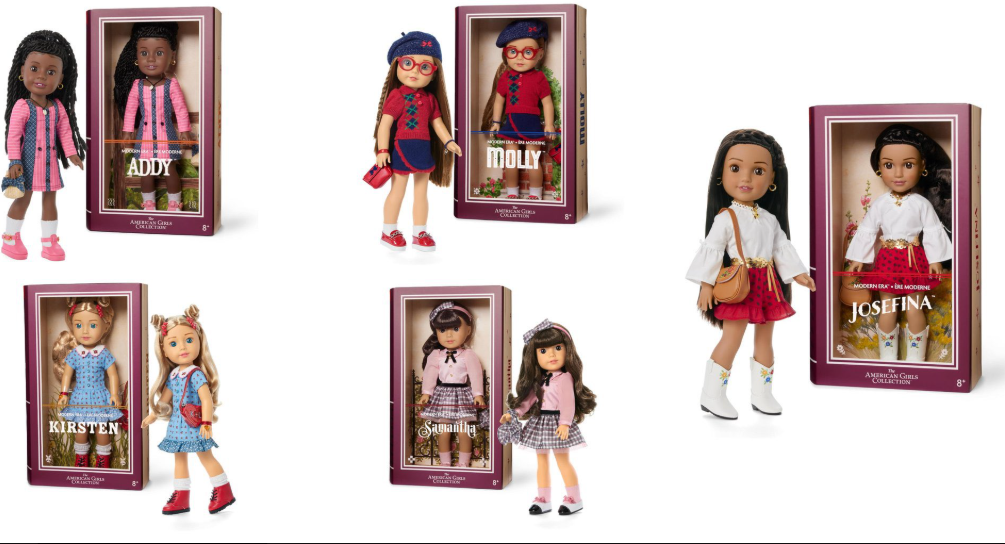
Alas, such anniversaries, while sparking fun memories, can also bring great disappointment. Such was the case when American Girl’s parent company, Mattel, announced that special developments were underway for the celebration, including the release of new dolls. These new creations involve taking the first six historical dolls, essentially putting them in a time machine, and reimagining their historical costumes and hairstyles as today’s fashion.
Spare me.
Lest you think that a love of nostalgia is tainting my view of such progress, let me just say that I’m not alone in my disgust. Upon hearing the news, social media erupted with women heartbroken over the desecration of their childhood toys.
They Instagramified our American Girl dolls 😭 pic.twitter.com/12v1gYe27O
— Alyssa Rinelli (@alyssa_rinelli) February 12, 2026
But then I realized that perhaps such desecration is a good thing. Why? Because such a blatantly revisionist move from Mattel paints a clear picture of the efforts happening all around us to scrub history and make us forget about those who went before, the values they espoused, and the freedom they cherished.
American Girl: A Vision Perverted
It seems like just yesterday that I received my first catalog from the fledgling mail-order company called American Girl. I had already read some of the books – in fact, the Kirsten series was what caused my phonics training to finally click and enable me to start reading sentences, so eager was I to find out what came next in the story.
The dolls made these stories more tangible, bringing the feminine beauty of historical clothing to life. Little girls like me didn’t live in the fairytale world of Disney princesses that today’s little girls seem obsessed with; instead, our dress-up time consisted of pioneer- or Revolutionary War-era costumes. We loved history and wanted to play “olden days,” – and now that I think of it, American Girl probably played a role in such interest.
And that was exactly what American Girl’s founder, Pleasant Rowland, had intended. According to stories I’ve heard over the years, Rowland’s company began out of her disgust that she could only find a lumpy Cabbage Patch doll or a svelte Barbie to gift to a young female relative. Wanting something more realistic that could also incorporate solid lessons into play, she created American Girl dolls and books, introducing young girls to the stories of those who shaped the history of a great country.
Such history, however, is apparently anathema to many in our current society. Statues have fallen, heroes have been demeaned because they dared to be human and make mistakes at some points in their lives, and the past rewritten and viewed through a lens of race and oppression.
These new dolls from American Girl fit right into this current view of history. Granted, they’re probably just an effort by Mattel to turn a fast buck, but by ditching the historical costumes, these new rollouts teach that the past is a relic to be ignored while our present attitudes and actions take precedence.
Keeping the Past Alive to Preserve the Future
A thought from 20th-century author and scholar Russell Kirk speaks to this folly. “We ought not to endeavor to revise history according to our latter day notions of what things ought to have been, or upon the theory that the past is simply a reflection of the present,” he wrote in 1955.
Instead, Kirk believed that the past is one key to the improvement of our present society. “Men cannot improve a society by setting fire to it: they must seek out its old virtues, and bring them back into the light,” he wrote elsewhere. These virtues included “the revival of a feeling of nationality, community, [and] repudiating Utilitarian selfishness and individualism.” He also mentions a “restoration of true religious feeling,” “the preservation of local government,” and efforts that restore more “agricultural interest.”
One could argue that the American Girl characters promoted attitudes and agendas that weren’t always the best, yet they did promote some of these values which Kirk believes are essential to a healthy society. Kirsten’s story, for example, shows the importance of assimilating into the new country you’ve chosen to call your home, as well as the importance of the family farm; Kit’s story shows the importance of building a community on which one can rely during tough times; and Molly’s story shows the importance of denying ourselves in order to help those fighting for our freedoms.
The rollout of the 40th anniversary American Girl commemorative dolls seems like just one of the dozens of ways our culture attempts to “set fire” to the country we know and love. Yet rather than grow angry and furious about it, we should use this silly little plaything to remind us just how important history, its characters, and the values they espoused are to the successful continuation of our nation.
And who knows? Maybe, in this 250th anniversary of our nation, someone else will step up and reclaim the vision that Pleasant Rowland once cast for her historical doll company, rekindling the next generation’s interest in the history that can bring the old virtues back to light.
—
This article was made possible by The Fred & Rheta Skelton Center for Cultural Renewal.
Image Credit: Mattel/X