
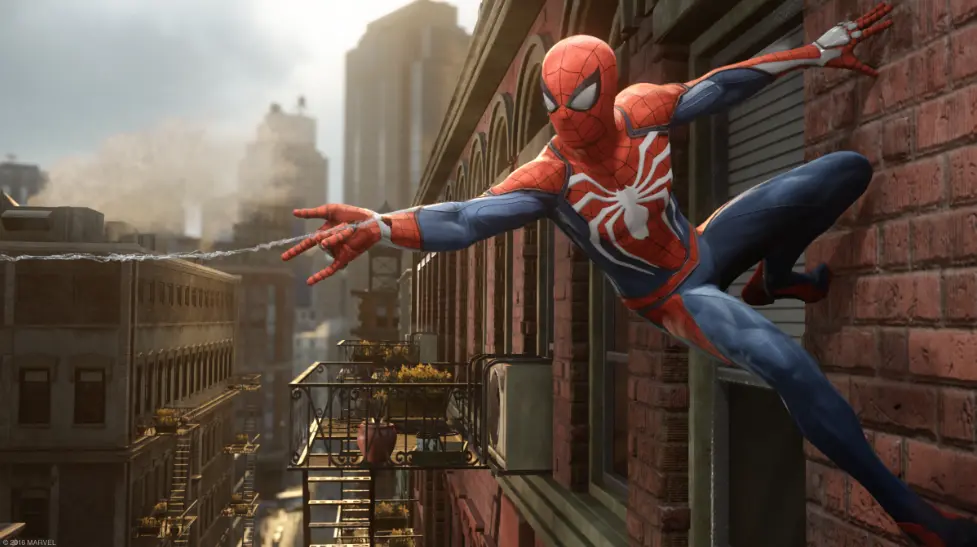
This past summer, “Spider-Man: Brand New Day” quietly became the biggest box-office success in U.S. history, grossing even more in ticket sales than “Star Wars: The Force Awakens.” I’m not surprised. This statistic teaches us (and hopefully Hollywood) the importance of choosing storytelling over agenda-peddling.
It’s not that “Spider-Man: Brand New Day” is the best film ever. It succeeded because Disney/Marvel (finally) recovered an understanding of what storytelling is really about. Audiences are so starved for a worthwhile film that they flocked to theaters to fill that hunger.
In the early 2010s, Marvel movies were genuine blockbusters; they felt fresh, exciting, and emotionally satisfying without being too weighty. People busted down the doors to get into theaters. The public – including the people at Marvel itself – began believing Marvel could do no wrong, that every new Marvel release was the equivalent of printing money for the company.
But then the woke revolution reached its American apogee, and Marvel began losing sight of how to tell a story that mattered. Hollywood in general and the Marvel Cinematic Universe in particular began to release flop after flop after flop. The film quality decline during this era is reflected in the drop in approval ratings from critics during Marvel’s Phase Four and Five sequence of films.
The films of the woke era suffered from a few major flaws. First, Marvel began believing that woke virtue signaling was more important than good storytelling. They race-swapped and gender-swapped beloved characters, introducing a heavy dose of new LGBT characters and adopting the neo-Marxist DEI ideologies in vogue in corporate America and the media. Audiences quickly realized Marvel films were a waste of time.
In 2022, one perceptive Reddit user voiced the frustration many moviegoers were feeling:
I don’t watch entertainment to be preached to or to learn a lesson. … I like to learn in a learning environment or by going out and looking for research and brushing up on a subject. I do not go to a theater and pay excrutionally [sic] higher and higher prices so that I can ‘learn something’ or so I can be made to feel guilty for my skin color or my ‘privledge’ [sic] or … for being male.
In the mid-2010s, Marvel also began hiring poorly qualified writers and directors, chosen by skin color or gender rather than competence. As a result, the stories got worse – not because there aren’t talented black writers or female directors, but because Marvel let ideology trump quality by choosing exclusively from such categories, without regard for the individual traits of the particular storyteller or director they were hiring.
The Marvel writing rooms began making major storytelling blunders, working themselves into a corner because of their mishandling of a key dramatic component: stakes.
In a thriller or adventure story, it’s important to continually raise the stakes: bigger villains, more intense danger, more on the line for the heroes as the saga progresses. That’s what keeps the excitement stretched taut. In the early Marvel movies, the heroes faced threats to a city, then to the whole globe. Finally, they confronted threats to the entire universe.
But where do you go from there? How do you raise the stakes from a cosmic threat level to something more? Marvel never adequately solved this problem. Their solution was to move to stories about threats to multiple universes by introducing the concept of the multiverse and time travel.
Yet by introducing time travel and limitless universes where virtually anything was possible, allowing for alternate timelines and the resurrection of characters who had died, Marvel inadvertently made the problem worse. Instead of raising the stakes, they removed them. If no death was permanent, if no event had final significance because either it could be reversed through time travel or it simply didn’t happen in some other universe, then the events of the films meant nothing.
By this point, Marvel had introduced too many characters, too many subplots, and too much action. The movies became bloated action set pieces without enough time to develop characters. And that is the death knell for any story.
World-ending threats do not move us in the same way that the death of a single beloved character does. The extinction of the planet is an abstraction; the death of an individual is concrete. Even in an action movie, the spectacle matters because the audience cares about the individuals involved in the battle. If you don’t care about the character, there’s only so much CGI wizardry that can get you to sit in a theater for two hours. Thus, recent Marvel movies became formulaic, heartless spectacles, and that gets dull very quickly.
But the newest Spiderman film succeeded because it has heart. Instead of focusing on cosmic stakes, this film focuses on the personal stakes of Peter Parker as he wrestles with nostalgia for the past, disconnect from people he loves, and the transition into full adulthood. It is very relatable and very human, giving a ballast to the external conflict, the villains, and the battles that a film without this investment in character development could never have.
Here, much credit goes to Tom Holland, the actor who plays Parker/Spider-Man. Holland was heavily involved in the writing process, pushing for all the critical elements we’ve discussed: character development, authenticity, and relatable personal stakes. He knew these were important because he actually spent time listening to fans. As Holland explained in an interview with Fandango:
This time round is the first time I’ve been let into the creative process before pen has hit the page. Bringing the voice of the fans to the writers room has really given us a leg up in creating something that’s really fun and different. They really wanted this street-level Spider-Man movie that felt relatable. That didn’t necessarily feel like saving the world, but maybe saving himself.
In summary, “Spiderman: Brand New Day” replaced woke messaging and runaway stake-raising with character-driven storytelling. The results speak for themselves. As film critic Griffin Schiller put it, “Thank you, Tom Holland and Destin Daniel Cretton, for making Marvel movies human again.”
Holland should get a raise. I know he makes a ton of money already. But seriously, he may have just saved the entire Marvel brand – or even Hollywood as a whole if other studios start following this pattern.
—
This article was made possible by The Fred & Rheta Skelton Center for Cultural Renewal, a project of 1819 News.
Image credit: Pxhere























Leave a Comment
Your email address will not be published. Required fields are marked with *