
Today, Master of Fine Arts (MFA) programs in creative writing are often the norm for people who want to become serious about writing since they provide a structured, formal education in how to write fiction and poetry. With over 200 MFA programs in the U.S., one would expect we’d see more literary achievement than ever in contemporary society, yet the opposite seems true.
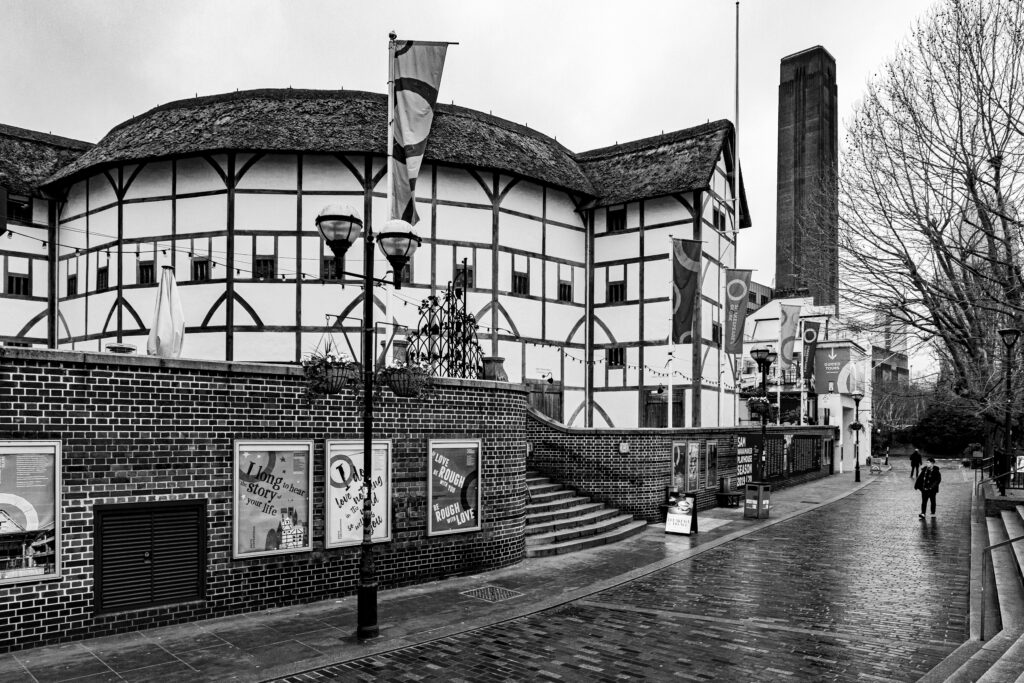
Some of the greatest writers of all time did not receive formal education in writing. Shakespeare’s approach to his literary career was, in many ways, the opposite of an MFA. Here are a few ways in which he wouldn’t have qualified for today’s creative writing programs.
1. Shakespeare didn’t even finish an undergraduate degree
From the meager records of Shakespeare’s life available, it seems he attended the King’s New School in Stratford-upon-Avon for his primary and secondary schooling. This consisted of the standard grammar school education of his time, steeping students in classical literature and languages. In his book “Appreciating Shakespeare,” Dr. Gideon Rappaport describes some highlights of Shakespeare’s grammar school education:
- Memorization of William Lily’s “A Short Introduction of Grammar,” which included sections on both English and Latin
- Memorization of Latin phrases and reading Terence, Plautus, and Aesop in Latin
- Translation of Bible passages from English to Latin
- Study of Cicero’s “Rhetoric” and “Topica”
- Reading Roman history and poetry, including Ovid, Virgil, Horace, and Juvenal
- Translation of Greek New Testament passages into English
- Memorization of over 200 figures of speech
So even as just a high school graduate, Shakespeare would have possessed an excellent literary education – one that would probably rival or exceed the education of many college graduates today.
But as far as we know, he did not attend university. So he would not have had the academic prerequisites for an MFA program in existence today.
Moreover, even with the thorough grammar school training, the brilliance of his writing and the richness of the profuse literary and historical references throughout his plays remains quite surprising. It speaks to his singular genius, a genius that could produce complicated, profound, and learned works without receiving a complete education according to the standards of the time.
2. He “plagiarized”
Few of Shakespeare’s plots are original. To construct his play’s basic storylines, he borrowed wholesale from myth, history, folklore, or existing plays. Of his 38 plays, only two contain plots completely of his own invention: “Love’s Labour’s Lost” and “The Tempest.”
Does that mean Shakespeare was unoriginal? Not at all. For much of literary history, in fact, what mattered far more than the originality of the plot of a work was how the author handled that material, and Shakespeare is unparalleled in his ability to take a raw plot and turn it into the highest art. He practiced literary alchemy, transforming everyday materials into poetic gold, drawing on the common store of his cultural heritage to create something transcending its source material.
Literary critic Henry Oliver explains that great works of literature are “extraordinary aesthetic achievements. They record aspects of a society, but they also give them an intensity of expression that has lasting power in the world.”
He used Shakespeare as a premier example, saying, “Many versions of Romeo & Juliet were played in the London theatres before Shakespeare’s — but it was his words that remained with audiences so unforgettably.”
Shakespeare may have borrowed plots from other sources and traditions, but no one dares borrow them again after he gave them their definitive form.
3. He didn’t endlessly revise his projects
Standard creative writing advice today is to revise, revise, revise. “Edit your manuscript until your fingers bleed and you have memorized every last word. Then, when you are certain you are on the verge of insanity … edit one more time!” says thriller writer C. K. Webb. She is simply reiterating the usual advice from contemporary giants like Stephen King and William Zinsser. This is the modus operandi of modern MFA programs, the sharp blade that (supposedly) divides amateurs from professionals.
But Shakespeare operated somewhat differently. Yes, he certainly did revise his plays, sometimes extensively – but often this occurred after their initial publication, or even during rehearsals. He was writing for deadlines, pumping out new pages to be performed regularly, rushing fistfuls of lines to actors without always smoothing everything out beforehand.
His was a more dynamic writing process, responding to the needs of his acting company (The King’s Men), censorship laws, the viewing public, not to mention the pursuit of cash. Plays evolved between initial performances and later drafts.
Despite some cases of substantial revision, he didn’t agonize over every line prior to letting it flow from an actor’s mouth in public. He simply didn’t have that luxury. Nor was it always necessary in order for him to produce magnificent verse.
We can see evidence of this more fluid method of working in “Much Ado About Nothing.” As Sir Stanley Wells explains:
The ground plans for some of [Shakespeare’s] plays are more schematically worked out than others. Much Ado About Nothing, for instance (first printed I believe from his original manuscript) has an improvisatory air about it, as if at times we can catch him in the act of working out his plot as he went along.
Wells notes the presence of a character – Hero’s mother Innogen – who does nothing in the play, as though Shakespeare initially thought he might use the character, then eventually realized he had no real role for her, or else did not have enough actors to play her – yet didn’t take the time to remove her completely from the text.
Wells concludes:
The scripts of his plays, then, were fluid; those that survive are as it were only snapshots taken at various periods of their evolution from first manuscripts through early production scripts through adaptation necessitated by varying conditions of performance and complicated by changes of their author’s mind.
These discrepancies between Shakespeare’s career and the MFA approach remind us that great writing doesn’t necessarily correlate with advanced degrees. Some of today’s writing dogmas – such as insisting on perfection before publication and total originality – might actually work against high literary achievement, as Shakespeare’s story shows.
—
This article was made possible by The Fred & Rheta Skelton Center for Cultural Renewal.
Image credit: Unsplash






















Leave a Comment
Your email address will not be published. Required fields are marked with *