
English philosopher John Locke once advised that children should have “shoes so thin, that they might leak and let in water, whenever he comes near it.”
Yikes! I thought when I first read that passage in “Some Thoughts Concerning Education” years ago.
The mother’s heart of caution within me still balks at that idea … but now I wonder if Locke – at least in principle – was on to something. Perhaps he was trying to tell us that hardship and exposure to the elements don’t hurt a child; instead, it likely only makes him stronger and more fit to meet the challenges he will endure as an adult.
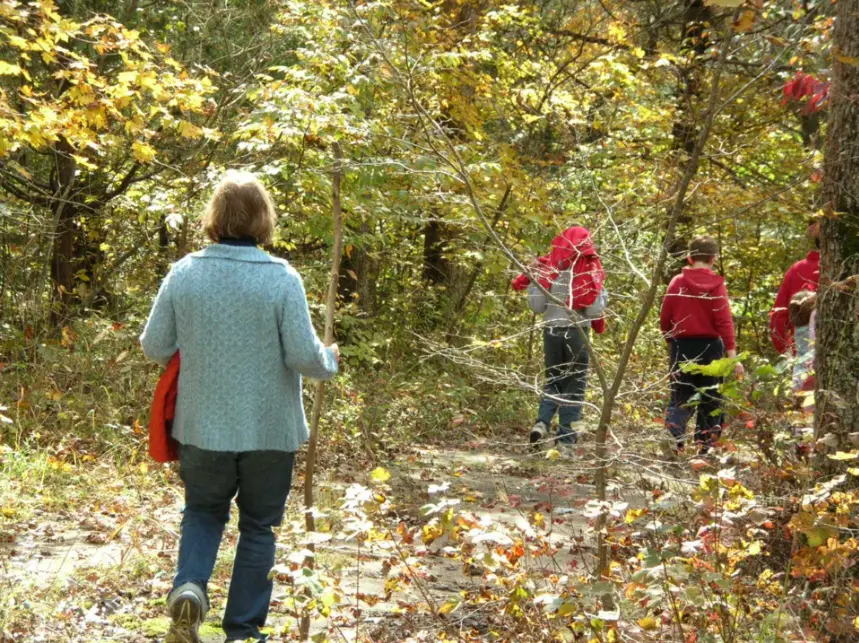
If so, Locke would likely approve of the detention program implemented at Morse High School in the state of Maine. Rather than sit in a classroom for several hours, students can serve their time for misbehavior by tromping through the woods on a snowy hike, led by a school guidance counselor.
Yes, such a program likely means wet feet and cold hands … but I can’t help but wonder if such “punishment” isn’t providing these students with a greater, more well-rounded education than the one they’re receiving in the classroom.
For starters, and as previously mentioned, such a detention gets students out of the official classroom entirely. Some might think this is a bad thing – after all, the classroom is where learning takes place, right?
Yes … but what kind of learning? Classroom education is the type of learning that teaches a student to be a conformist. He must do everything at the pace of the other students – no working ahead or lagging behind. He must study the assignment and homework exactly as it’s given – no going down rabbit holes to explore ideas that intrigue him. And he must stay inside, shut away from the fresh air and exercise that clear his brain and enable him to breathe freely. If we’re honest, such instruction seems more likely to cause the student to shut down rather than experience true learning
Second, the wooded-hike detention teaches students to interact more with others. Guidance counselor Leslie Trundy has found that such hikes enable students to bond with their detention comrades, students that they likely wouldn’t interact with otherwise. And the adventure of pursuing a mission or goal together in the great outdoors likely diminishes any animosity that may otherwise arise between cliques.
Third, this new form of detention gives students the opportunity to reflect on where they’re going in life. Trundy sees students open up and discuss their hopes and dreams in ways that never happen otherwise, enabling her to offer suggestions and direction for their future life paths.
Fourth, the walk-in-the-woods detention gives students solitude, allowing them to think about what they’ve done, while also getting them away from the pull of the digital world for a while. Who knows whether the dreaming and imagining done on those walks will lead those students toward future success, whether spiritual, social, or career-wise?
Interestingly, these elements are all noted by former New York Teacher of the Year John Taylor Gatto. In Gatto’s mind, true education doesn’t necessarily happen inside the classroom; instead, it is the moments of real life that bring genuine learning and understanding to a student:
Whatever an education is, it should make you a unique individual, not a conformist; it should allow you to find values which will be your roadmap through life; it should make you spiritually rich, a person who loves whatever you are doing, wherever you are, whomever you are with; it should teach you what is important, how to live and how to die.
In other words, good education should make a child love life, approaching it and everything it brings with eager excitement and creativity.
Is that the type of education we see in today’s schools? Given the increasing behavioral challenges, scores of disillusioned and listless students, and stagnating test scores we see nationwide, it seems the answer is no.
One can’t help but wonder if we would see some of these problems reversed if more schools tried the walk-in-the-woods approach to detention implemented by Morse High School.
And maybe, just maybe, we should extend such a practice beyond disciplinary measures, incorporating more movement into the ordinary aspects of the classroom. To quote Thomas Jefferson, one of the biggest advocates of American public education in the founding period, “I give more time to exercise of the body than of the mind, believing it wholesome to both.”
Would that more of us today realized this truth.
This article was made possible by The Fred & Rheta Skelton Center for Cultural Renewal, a project of 1819 News.
Image credit: Public Domain Pictures

























Leave a Comment
Your email address will not be published. Required fields are marked with *