
I remember the first time I heard Apple’s “Siri” voice in elementary school. I was awed and a little scared of this talking robot, but now, asking Siri for answers from the web is commonplace. Yet for most of us in Gen Z and Gen Alpha, this is all we’ve ever known, and there’s no escaping the digital world in the 2020s.
It’s telling, then, that today’s young people increasingly prefer physical media over digital.
Physical Books
Although e-books are more practical, easier to obtain, and cheaper to buy, print books still dominate the reading market. Pew Research Center found that 64% of American adults read a print book in the past 12 months – more than double the percentage of Americans who read an e-book in the same time frame. In fact, 42% of readers prefer physical books.
I can understand why. I have fond memories of balancing a massive armful of books with my chin as I staggered out of the library in elementary and middle school. And while I received a Kindle as a middle school Christmas present, it has fewer than 10 books on it, for unless I’m traveling, I vastly prefer the experience of reading a physical book, gingerly turning pages with my fingers and sometimes wincing at the musty library smell.
This preference may seem surprising to many. After all, digital technology continues to expand at a dizzying (and sometimes alarming) rate. It stepped past the bounds of STEM long ago and has become an integral part of the study of the humanities as well; literature, music, and entertainment are all transitioning to digital formats.
Vinyl Collecting
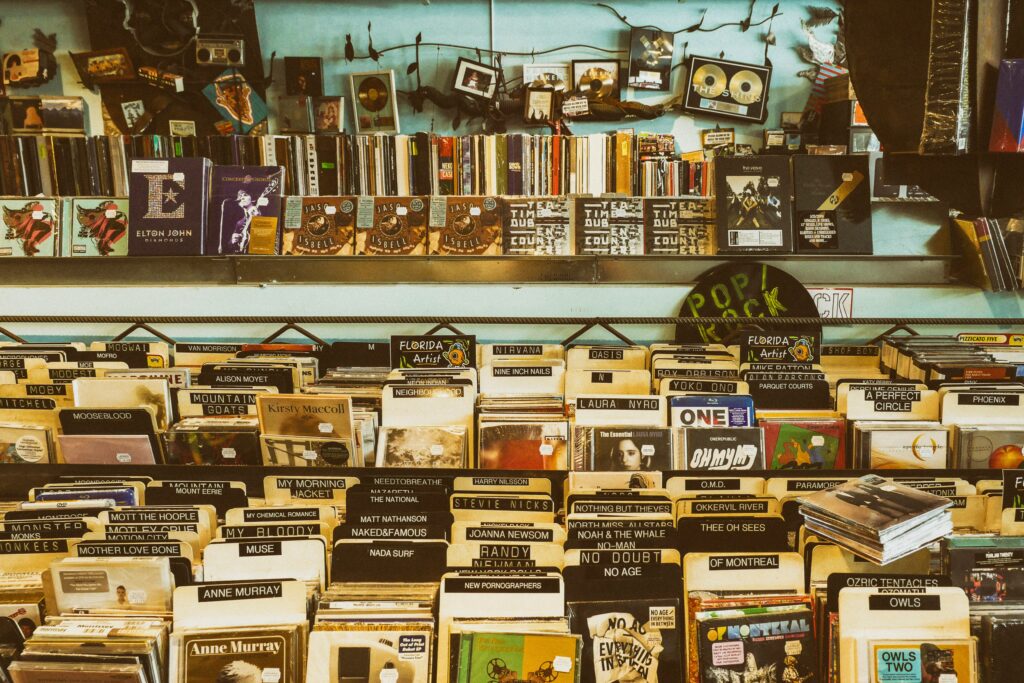
Take vinyl sales, for instance. I have many Gen Z friends who collect vinyls from their favorite music artists – all while continuing to stream the digital album on Spotify. The Recording Industry Association of America reported a 5% increase in physical media sales (vinyl and CD) in 2025, surpassing one billion dollars in revenue after steadily declining between 2000 and 2015.
Andwhile CDs are less popular, Music Week reports that CD sales are steady. In fact, 46% of today’s children (Gen Alpha), listen to CDs. Even DVDs for film entertainment at home are seeing a resurgence. In 2025 alone, sales of 4k Blu-Ray disks increased 12%.
One could hardly say that owning physical media is more practical. Personal libraries of physical books and movies need to be stored somewhere, and no one wants to spend 15 minutes digging through shelves to find “Ferris Bueller’s Day Off.” Cars hardly have CD slots anymore, as our phones and all they offer stay with us nearly 24/7.
That’s why it’s interesting to note that Gen Z vinyl collectors aren’t collecting vinyl albums for their intended purpose – that is, listening to music. They prefer to use them as home decor, or simply as collectibles to be perused when they feel like it. I do the same thing with my book collection. Sometimes, I’ll buy a book because it’ll look nice on my shelf without any imminent plans to read it.
Why Is Physical Media So Popular?
Why, then, is physical media so popular? Is it nothing more than another internet trend?
I believe our culture’s enduring love for physical media points to something much larger.
First, we like to possess the things that we love. We like to call them our own. Netflix and Spotify subscriptions are simple and convenient, but we can’t do more than borrow from these corporations. The films and music that we love are in the hands of a third party that we neither know nor trust.
While books, CDs, and DVDs can certainly be lost to time, they’re much more real than the digital editions that we’ll find on subscription services who can pull their media from the public at any time. On several occasions, I’ve found songs I love no longer available on Spotify, and there’s nothing I can do about it. Likewise, movies and TV shows can disappear from our current streaming service, forcing us to sign up for yet another service if we want access to our favorite entertainment.
Physical media also carries stories in ways that digital media never can. There’s a particular kind of fun in purchasing a used book that has the previous owner’s notes in the margins or a “Merry Christmas, 1973” scribble in the front cover. As Helene Hanff wrote in “84, Charing Cross Road,” “I like the comradely sense of turning pages someone else turned, and reading passages someone long gone has called my attention to.”
Finally, in a world where everything from menus to doctor’s office check-ins to fast food orders is digitized and automated, and where we get AI overviews before human answers, we all crave the real. We’re all sick, deep down, of tapping on blue-lit screens. Even though our desk jobs might make us feel as though the digital world is real sometimes, we all need a reminder that we’re not robots. We’re not machines. We’re humans, and we all need the personal experience of holding a paper book or CD. We need physical art. Our souls need it.
—
Image credit: Unsplash






















Leave a Comment
Your email address will not be published. Required fields are marked with *