
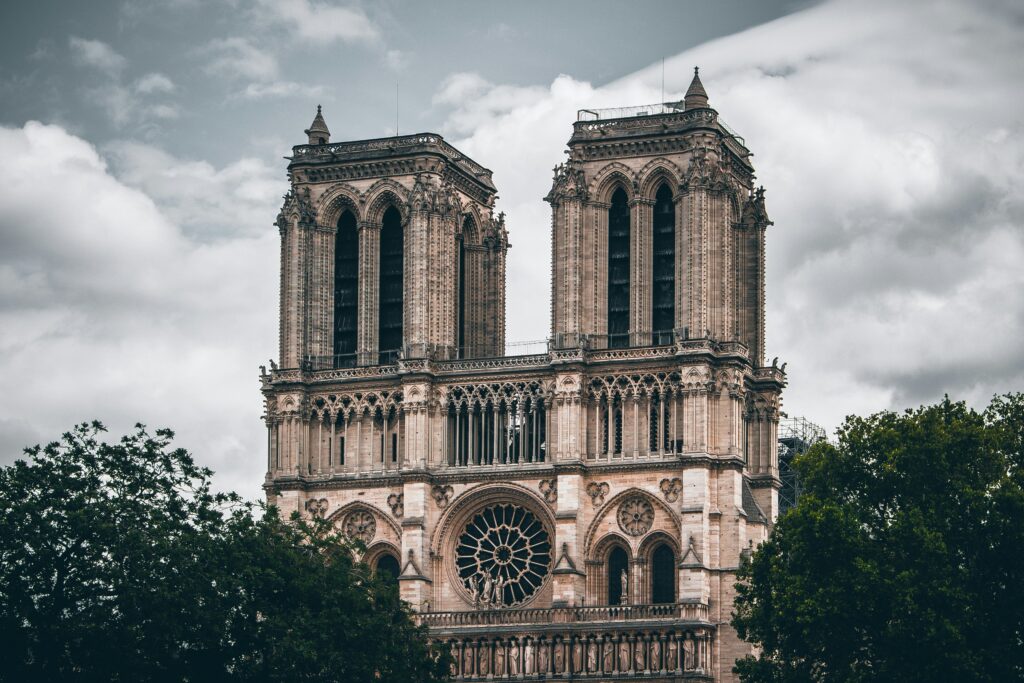
I’ve officially lived in Angers, France, for over a month now, and I’m beginning to take the beauty of Europe for granted. For example, I walk past a church built in the Middle Ages on my way to work every morning; the houses have tiled roofs and are built from the same, quaint, whitish stone; a stone wall along a busy street dates to the Roman era.
While I haven’t even seen a fraction of the cities, monuments, and works of art that interest me here, I have, however, visited no less than 14 churches.
These places of worship stand quietly all over France. I attend Mass at a beautiful country church in a nearby neighborhood. Another medieval church in my area features beautiful stained glass and is open daily for prayer. While wandering around Nantes a few weeks ago, I stumbled across two massive Gothic cathedrals and one smaller Gothic church within a few blocks of each other. On my way to the bank in Angers, I rounded a corner and gasped when I saw another Notre Dame-esque Gothic cathedral in front of me. Even the dozens of country towns which flash by the French trains feature their own beautiful churches rising above the rest of the village, each likely hundreds of years old.
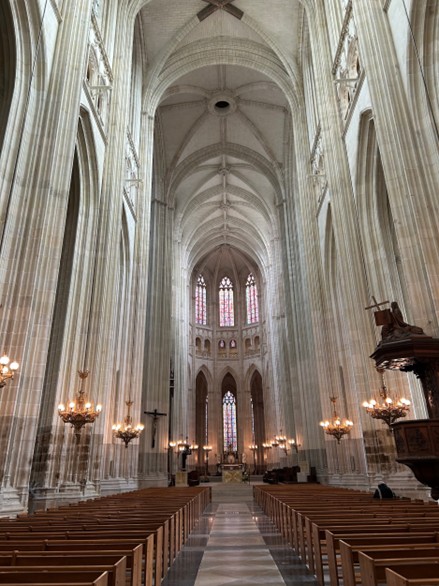
Cathédrale Saint-Pierre-et-Saint-Paul de Nantes
These buildings, with their ornate steeples, towering ceilings, dazzling stained glass windows, and vast expanses of cold stone floors, are breathtaking. The atmosphere is hushed and reverent; visitors speak in whispers. The ornate beauty of each space demands it.
Yet I don’t get this feeling upon entering American churches.
Of course, there are many beautiful churches in the U.S. The ubiquity of churches across America is wonderful. But I can’t help but cringe when I see a church that resembles a storefront or a warehouse more than a place of worship.
Naturally, a church’s appearance has no bearing on the moral quality of its teachings or its community. But I can’t help but wonder whether American Christians would put more stock in their faith if their sacred spaces actually felt sacred.
American Christianity cares immensely about being welcoming, accepting, and above all, accessible. These are noble and worthy goals. But has the push for “accessibility” put the sacred on the same level with the worldly, to the point where the sacred is no longer regarded with reverence?
Consider, for example, the fact that European churches are strikingly different from the “everyday” aspects of life. They’re often set apart from the rest of the town or city, and usually feature a large square in front of them. They tower above other buildings. Thanks in part to how ancient some of them are, they would never be mistaken for any other type of venue than a place of worship.

Église Sainte-Emérance, a church in my neighborhood dating back to the Middle Ages
By contrast, many American churches – in their quest to be “accessible” to newcomers – have taken on an atmosphere that runs the risk of feeling too casual. Just as our clothing affects how we act, the spaces that we inhabit shape our behavior. If the church building resembles a conference center or theater, churchgoers will have a hard time thinking of church attendance as a high moral duty or an invitation to spend time with God.
The grandeur of European churches and cathedrals is intimidating. They’re far from accessible, especially, I imagine, to non-Christians. Yet grandeur inspires us to greater things. Stunning churches and cathedrals draw our attention to the immense importance of faith. They’re not “accessible”; they’re aspirational.
1 comment
























1 Comment
Jackal
February 12, 2026, 1:38 pmGuess you haven’t seen enough temples from the Church of Jesus Christ of Latter Day Saints
REPLY