Although it is a recent phenomenon, global immediacy is skewing our sense of justice.
The distance between countries is now bridged by our smartphones and we’re becoming a culture able to rattle off foreign leaders while clueless about the names of our own local mayors. The hyperconnectivity of the 21st century keeps us tuned in to overseas issues while we neglect what is here and now.
What precisely are America’s obligations to other countries? We hear this question repeatedly. It is heatedly debated among my friends, family, and broader community in general. But too often, an equally important question gets overlooked, one whose answer is far more within our control: What do we as individuals owe to foreign countries, distant debates, or internet drama?
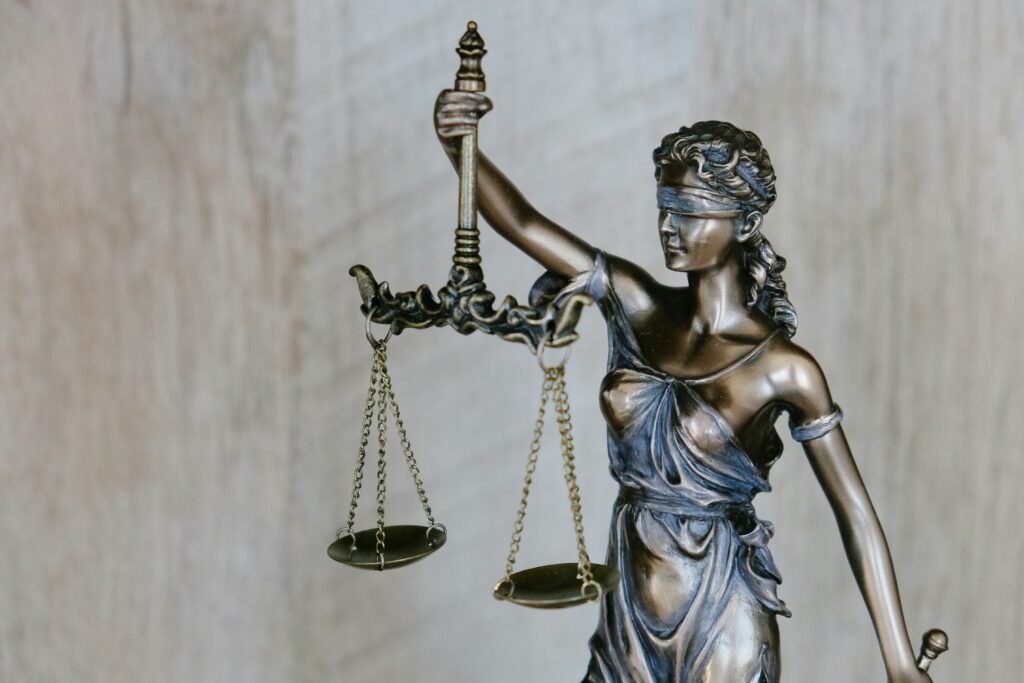
The cardinal virtue of justice can help us navigate this complicated terrain and find a balanced path forward.
Justice starts with us
In Plato’s “Republic,” justice is described as “doing one’s own work and not meddling with what isn’t one’s own.” Aristotle describes justice as giving others their due. This concept of justice as tied to personal responsibility was echoed by our founding fathers and remains at the core of conservatism.
But in our digitized world, we often fail to make personal responsibility a priority. Life is messy, so it’s simpler to live in the digital haze, devoting time, prescribing solutions, and pointing out problems in the lives of those we’ll never meet.
Yet justice demands that we be present in our own lives. Laundry isn’t as interesting as Kabbal, but it’s more important. Yard work shouldn’t be foregone to investigate the color of Charlie Kirk’s shooter’s sweatshirt. And the argument with mom is worth resolving far more than the feud between Tucker Carlson and Ben Shapiro.
The mental energy given to politics takes much more away from each of us than just our time. All the fire, passion, and energy that could be directed towards our own lives get absorbed into a void of nothingness, a collective vat of resentment and helplessness.
Tiny changes
“One may say that true life begins where the tiny bit begins,” Leo Tolstoy once said, or as some paraphrase that last part, “tiny changes.” Sadly, these tiny but vital changes can seem pointless when their backdrop is a globalist plot or the government’s impending collapse. But these tiny changes are the solution! If political commentators are right, and the world really is going to hell in a handbasket, then we especially need to embrace the small things that we can realistically change.
When disaster hits, virtue doesn’t magically appear out of nowhere. It must be practiced and stored up in the small, trivial moments of life, whether the discipline to go to the gym or the humility to not have an opinion on everything. Similarly, justice must first be exercised in our daily lives before we can expect it to occur on any larger scale.
The ripples of justice
Justice has a ripple effect. When we better ourselves, justice grows beyond just our personal lives, heightening our obligation to the people around us rather than to those on the other side of the world or the screen.
Sadly, the inversion is more common. The trend of “going no-contact” and setting harsh boundaries with supposedly “toxic” friends and family continues to rise, yet we aren’t willing to distance ourselves from the influencers who bring incessant anxiety, despondency, and anger into our daily lives.
Prioritize your family and community
Justice doesn’t always seem effective at face value. Pursuing and accomplishing the good often doesn’t yield immediate results. We sow seeds but rarely reap our own harvest. The instant gratification of the virtual world fools us into a sense of reaping, and we’re left with a harvest of noise and powerlessness.
But as many great figures throughout history show us, the goal of doing what was just, rather than getting results, is exactly the reason they were influential. Emperor Karl I of Austria prioritized his family and countrymen and was later banished, failed to regain his throne, and died in poverty to avoid inciting civil war among his people. Aleksandr Solzhenitsyn returned to Russia after his gulag experience out of moral duty, not because it was a good career move. St. Joan of Arc suffered defamation and execution by the clergy because she wouldn’t back down from the truth and trusted in divine Providence.
Injustice was as glaringly obvious for them as it is for us, but they saw that the power to fight it lies first with the individual, and they clung to their convictions and their communities above all else. Unlike most of today’s podcasters, they didn’t need a bogeyman for all the world’s evil or a government to fix everything.
We cannot be everything to everyone, and awareness is not the only weapon. We fight injustice by being present to our own communities instead of hitting the bell for more notifications.
—
This article was made possible by The Fred & Rheta Skelton Center for Cultural Renewal.
Image credit: Unsplash

























Leave a Comment
Your email address will not be published. Required fields are marked with *