
The literary arts are predicated on the possibility of transformation and rebirth. As every first-year creative writing student knows, fiction is about the possibility of soul-change – that’s what makes it interesting to us. Great stories reveal how the events of the plot reshape the interior life of the character, developing and changing the character. A protagonist is rarely the same person at the end of a novel compared to who they were at the beginning.
In most of the greatest literature in our tradition, this transformation occurs with a positive thrust. Even in a work that might be described as a tragedy, there is nevertheless a spiritual renewal that takes place inside the characters. This transformation typically involves some symbolic (or literal) death and rebirth.
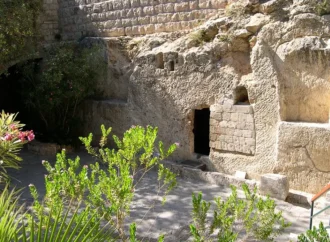
The human mind is fundamentally oriented toward stories of resurrection. It’s as if it’s encoded into our DNA. It’s what makes a story a story. Even outside of explicitly Christian contexts, humanity is obsessed with the possibility of the reversal of death – whether literally, symbolically, or psychologically – and the pattern plays out everywhere in literature, as if the story of the empty grave is the only story to be told.
One evidence for this claim lies in the work of mythologists and narratologists such as Joseph Campbell. Campbell famously outlined the pattern of “the Hero’s Journey” that he saw recurring throughout all the world myths and legends he studied. That narrative structure inevitably involves, toward the end of the story, a death/resurrection cycle. The hero descends – either physically or literally – into an underworld, where he must confront some important truth about himself or the world. This is a psychological or spiritual death, sometimes involving literal death. The hero reemerges (resurrects) with renewed purpose and vigor, perhaps possessing the secret or talisman that was the goal of his initial quest. A famous example from “The Odyssey” involves Odysseus’ descent into Hades where he learns from the dead what he must do in order to make it home to Ithaca.
The trend of a recurring story pattern involving death/resurrection continues today; screenplays (and often novels) follow a well-established format mirroring key aspects of the Hero’s Journey. This modern storytelling template – which draws on older archetypes like the Hero’s Journey and is rooted in world mythology – was best articulated by Bruce Snyder, who identified the sequence of key moments or “beats” within any successful and effective screenplay. Toward the end of the story are beats called “All is Lost” and “The Dark Night of the Soul.” These are the moments where everything falls apart, where defeat and death (at least metaphorical death) seem to triumph, and the protagonist faces seeming failure.
Jessica Brody’s book describing this plot structure, “Save the Cat! Writes a Novel,” describes the “All is Lost” moment like this:
[B]efore our heroes can find that true path to real transformation, we have to bring them so low, so far into despair, that they have no other choice but to change … many characters die in this beat … And even if there’s not an actual death in this beat, there’s a hint at death … something must end here. Because the All is Lost is where the old world/character/way of thinking finally dies so a new world/character/way of thinking can be born.
Brody provides examples: the hero’s mentor dies, the totalitarian government arrests the hero, the two lovers break up, the heroine learns her love is already married, the hero is betrayed by someone he trusted, etc. In some cases, the hero literally enters the afterlife, like Odysseus or Aeneas.
Human narratives are about moments of death like this followed by transformation and resurrection. After the “All is Lost” and “Dark Night of the Soul” beats, the next beat is the “Break Into.” Brody describes it as follows: “[The protagonist has] lost everything, they’ve hit rock bottom and gone through a Dark Night of the Soul, and now they know what they have to do [to succeed].” In other words, this is a kind of rebirth. The character has entered a death of some kind, been transformed, and emerged as someone new.
This archetype of death/rebirth is etched into the foundations of storytelling; it’s the primeval pattern of all narrative. Great storytellers intuit it. Apprentice storytellers learn and imitate it.
Why is it so universal? I think it’s because God chose to create a fundamentally redemptive universe. It’s written into the earth and the stars – we can’t avoid it. The reality of Christ’s Resurrection suffuses all of creation (include human sub-creations, like art) with light and directionality. And that direction is out of the tomb.
—
This article was made possible by The Fred & Rheta Skelton Center for Cultural Renewal.
Image Credit: Pexels