

What makes a city good?
Any human dwelling place is good insofar as it helps its inhabitants live well and achieve their ultimate end. The city must provide shelter, work, protection, and the other necessities of life. But a truly good city will support the flourishing of human life and community in all its dimensions: physical, economic, social, cultural, and spiritual. Furthermore, a good city is one that, through its intentional, thoughtful, urban design, fosters the integration of all these aspects of human life into a cohesive whole.
Wholeness means health, and health means wholeness. Many modern ills flow from the separation, stratification, and compartmentalization of human life. Work is separated from the home, parents from their children, husbands from their wives, social life from the neighborhood, economics from the common good, eating from agriculture, business from community, beauty from utility, and faith from the public square.
Unfortunately, many modern cities, in the very ligaments of their designs, have abetted this division. The most obvious way this occurs is through the modern city’s emphasis on single-use zones. One section of the city is designated for retail, another for office buildings, another for factories, another for schools, another for apartments, and another for suburban homes – and never the twain shall meet.
The modern suburban dweller finds his interior mental landscape shaped by his exterior landscape. The activities of his life occur in separate geographical realms that are increasingly mirrored by his internal conception of them. Hence, we think of our “work life,” “family life,” “social life,” “sex life,” “faith life,” and so on as though they each belonged to a different person. This is the dizzying diffraction of modern compartmentalization. We forget that none of these occupations can be properly understood without reference to the others, without integration between them. Just as the various systems of the human body interrelate, so too do the various threads of a human life – which is ultimately one thing.
Speaking of the human body, it’s worth noting how modern urban design minimizes the importance of the body. Cities are built to the scale of the machine, not the scale of the human person, designed to accommodate cars, planes, and throbbing, rushing streams of machines everywhere. The buildings rise impossibly high. Pedestrian traffic is often an afterthought. The various sections of the city – residential, commercial, cultural – are all separated by freeway, hardly reachable by foot. The machines facilitate the divisions of the city, and the divisions of the city necessitate the machines.
The designs encountered in the modern city, while impressive, are rarely classically “beautiful.” The emphasis is on efficiency, technology, utility, and industrialism. Viewed from above, the modern city resembles a huge circuit board. Few natural shapes or forms find their way into the urban aesthetic, unnecessarily dividing beauty and utility.
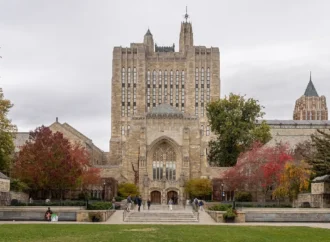
I say “unnecessary” because many cities of the past managed to be both beautiful and practical, incorporating natural forms without sacrificing usefulness. In fact, all these design elements described so far – single-use segments, the scale of the machine, and the utilitarian aesthetic – are not strictly necessary. Stroll through Europe’s old cities and you will find something quite different. Even some modern cities have attempted to emulate the classical designs, such as the newly-built city Cayalá in Guatemala. In these places you will find mixed-use neighborhoods – combining residential, retail, industrial, religious, and cultural elements – a walkable human scale, and an aesthetic of beauty integrating the natural and the human. Cities don’t have to be divided; they don’t have to be ugly.
It stands to reason that a healthy city would be whole or integrated, uniting the various elements of human life into something complete and interrelated, approachable on a human scale. In a city like Cayalá – intentionally built on traditional principles of walkability, harmony, proportion, community, beauty, and a human scale – the strands of human life coalesce into something complete. Recognizing that our physical environment shapes our character and culture, this traditional urban design creates spaces that naturally draw people together. Community emerges as a result.
A man living in such a city moves within an orbit of activities that harmonize: he wakes up in the apartment above the post office where he works. He walks his children to the school a few blocks away – a process that, unlike driving in a car, keeps all his senses integrated (smell, sight, sound, etc.) and in direct contact with the world around him. On his lunch break, he strolls to a nearby café, socializing with the local grocer and barber in a nearby park. In the evening, he collects the children from school and they walk to the church for vespers through a beautiful colonnade of pillars. They then return home, eating food purchased from the grocer, their family friend. Such a man’s life has a coherence to it that the modern city-dweller’s does not.
The image above is admittedly romanticized, but I’ve tried to briefly sketch a picture that’s true in its fundamentals. The inhabitant of the integrated city lives a more integrated and therefore a more human life. Such is the power of architecture and design. Urban design should foster this kind of authentic living, not inhibit it.
—
This article was made possible by The Fred & Rheta Skelton Center for Cultural Renewal.
Image credit: Pexels






















Leave a Comment
Your email address will not be published. Required fields are marked with *