
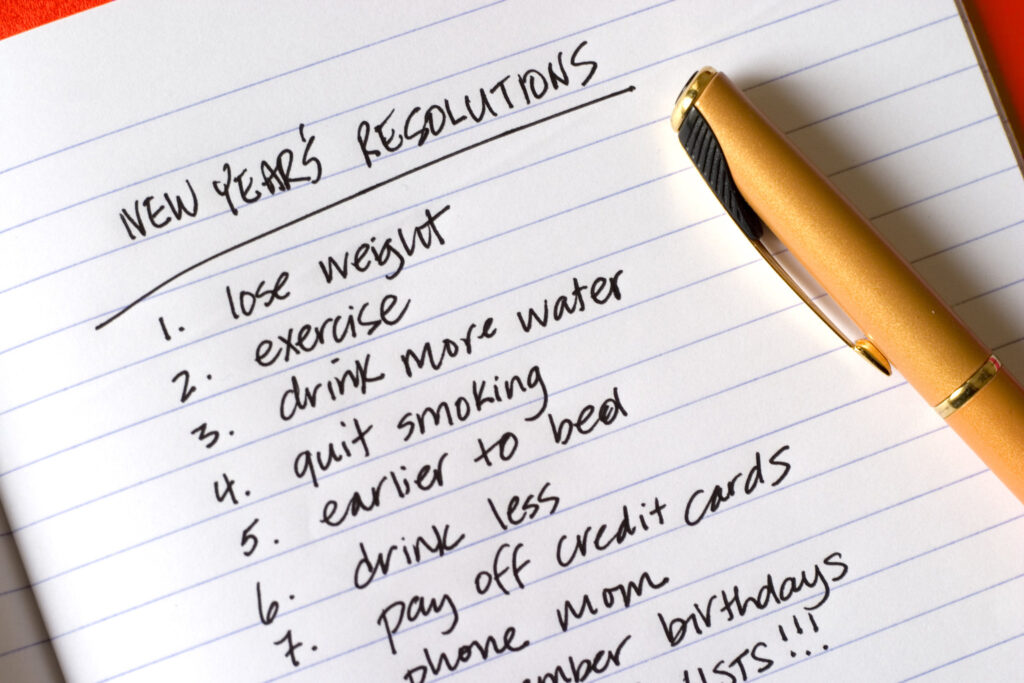
For millions of Americans, the start of the new year brings a familiar ritual as we pledge to be fitter, happier, wealthier, or more disciplined versions of ourselves. A recent YouGov poll found that roughly 25% of Americans want to exercise more in 2026, whereas 23% want more happiness and 22% want to eat healthier.
But many have observed that such lofty goals fade after the first few months of the new year.
This all-too-familiar rise of optimism and subsequent fall of resolve raises an important question. Should we really be clinging to the annual tradition of New Year’s resolutions at all?
For many Americans, the act of starting again on Jan. 1 can become overwhelming. The initial thrill of possibility often gives way to guilt, anxiety, or frustration when lofty aspirations collide with the grind of day-to-day life.
Research shows that traditional New Year’s resolutions have a poor success rate because they’re usually too ambitious, vague, or rooted in superficial desire for self-reinvention rather than grounded in the actual mechanics of lasting behavioral change, according to Psychology Today.
It seems that part of the issue is how people frame resolutions. Goals like “be happier” or “exercise more” sound good in concept, but they are too ambiguous and lack any meaningful amount of accountability. What does it mean to “be happier”? Is happiness synonymous with contentment, or does it have more to do with improved emotional resilience, stronger relationships, and a clearer sense of meaning and purpose? There are many ways to interpret happiness.
The same goes for those wanting to exercise more. How many times per week do they want to exercise? Three? Five? Once? Do they have a robust plan that will fit into a busy work schedule or family commitments? Research has shown that if someone is going to set resolutions, they must set concrete, measurable objectives to be sustainable.
This insight helps explain why so many New Year’s resolutions are abandoned by February. The cycle of motivation tends to be strongest in January – when hopes are high and the resolution is still new and exciting – but quickly dissolves when life sets in or stress increases. The science of habit formation shows that lasting change happens most reliably when our goals are directly linked to daily routines and incremental progress over an extended period of time.
Rather than generically saying, “I will exercise more this year,” a more effective commitments might sound something like this: “I will walk for thirty minutes after dinner on Mondays, Wednesdays, and Saturdays.” The latter is specific, measurable, and tied to a predictable part of life.
This approach has the capacity to mitigate anxiety around resolutions because it’s grounded in consistent practices rather than sweeping ideals that lack clarity. Instead of the pressure to reinvent ourselves on Jan. 1, we can treat the New Year as an invitation to refine habits slowly and intentionally.
There’s also a communal dimension to this recalibration. Many of the popular goals Americans set – exercising more, improving happiness, and eating better – cannot be realized in a vacuum. An environment conducive to these goals needs to be present, too. Happiness, for instance, is deeply influenced by relationships, purpose, and engagement with a community that shares similar values. Asking how we might cultivate habits that strengthen our ties to one another may be more potent than the wish to be happier. The same goes for exercising. It’s easier to maintain when it’s embedded in social networks or shared commitments.
We must reject the myth that transformation happens instantaneously. A year of steady progress is worth much more than high aspirations that fizzle a short time later.
Perhaps what we need in 2026 is to let go of the annual pressure to overhaul ourselves, and instead embrace the quieter but more powerful project of habit formation. That is the kind of change that’s durable enough to withstand the daily grind.
—
This article was made possible by The Fred & Rheta Skelton Center for Cultural Renewal.
(Flickr-Navy_NADAP, CC BY-NC-ND 2.0)
























Leave a Comment
Your email address will not be published. Required fields are marked with *