
Most Read from past 24 hours
Feeding Mind, Pursuing Truth
Philosophy
- Home
- Philosophy
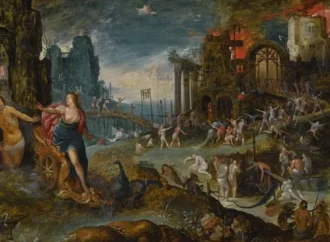
Why Does Dante Place Odysseus in Hell?0
- Culture, Entertainment, Featured, Literature, Philosophy, Religion, Western Civilization
- August 12, 2026
One of the most talked-about movies of the year, for so many different reasons, is Christopher Nolan’s adaptation of Homer’s “Odyssey.” The film has generated identity-politics controversies, classicist controversies, and Christian controversies (from Christians and anti-Christians). One of the lightning rods for arguments and thought-pieces is the proposed “Christianization” of Odysseus, illustrated by his guilt for the trickery of
READ MORE
Can Art Reveal America’s Soul?0
- Culture, Featured, History, Philosophy, Uncategorized, Western Civilization
- August 12, 2026
As someone who loves the Fourth of July and the story of our country’s founding, I was pleasantly surprised to see all the hoopla that came out of the woodwork last minute to celebrate our nation’s 250th birthday. Firework shows were more fantastic, commemorative memorabilia abounded, and social media was full of people proclaiming their
READ MORE
Be the Politician You Wish to See in the World0
- Culture, Featured, Philosophy, Politics
- August 7, 2026
We’re touchy when it comes to politics. “I liked insert [celebrity name], but then he became too political.” “Don’t talk politics at the table.” “I don’t think Christians should get political.” But when we say “politics,” what exactly are we talking about? What are the topics that have been banished from the banter at the
READ MORE
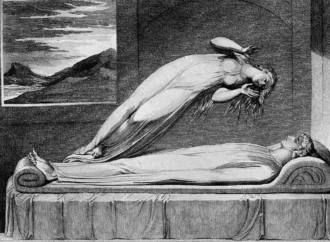
Why Does My Soul Keep Going After I Die?0
- Featured, Philosophy, Religion
- August 4, 2026
“What happens to me after I die?” is one of the most common questions in human history. While virtually every religion in human history provides answers to this question, they are often specific to that culture and faith. However, philosophy seeks to answer the question using principles accessible to every human by virtue of his
READ MORE
The Necessity of Mystery0
- Featured, Philosophy, Religion
- July 29, 2026
I spent a good part of one summer trying to convince my 15-year-old brother (who was, at the time, decidedly unenthusiastic about philosophy) that it’s impossible to prove everything. It was something I’d become convinced of after reading C. S. Lewis’ “The Abolition of Man,” in which Lewis explained that accepting what was unprovable was
READ MORE
Grappling With Disappointment and Despair1
- Culture, Featured, Philosophy
- July 15, 2026
No life lacks disappointment. From the mundane (our favorite sports team loses yet again) to the life-shattering (an unexpected spot on an MRI scan), disappointments punctuate our existence. In politics, religion, finances, relationships, health, we’re forced repeatedly to confront the failure of hopes, the crumbling of visions. “We all break a little when we fall,”
READ MORE

Most Read from past 7 days
Would You Rather Be Just, or Only Seem So?
- Featured, Philosophy
- September 28, 2026
Most Read from past 30 days
Neurotheology, a Bridge Between Religion and Science
- Culture, Featured, Philosophy, Religion, Science
- September 11, 2026
Most Read of All Time
Why Are So Many Young People Dying Suddenly?
- Politics, Philosophy, Science
- June 28, 2022
Most Read of All Time
What Did Nietzsche Mean by ‘God is Dead’?
- Culture, Philosophy, Religion
- February 5, 2024
Latest Posts
-

Would You Rather Be Just, or Only Seem So?
- Featured, Philosophy
- September 28, 2026
-

Can God Be Truly Good When There Is Suffering?
- Culture, Featured, Philosophy, Religion
- September 28, 2026
-

Neurotheology, a Bridge Between Religion and Science
- Culture, Featured, Philosophy, Religion, Science
- September 11, 2026
-

Plato's Cave Was About Us, Not Others
- Culture, Featured, Philosophy
- September 11, 2026
Top Authors
-

Annie Holmquist
ADMINISTRATOR
-

Jon Miltimore
AUTHOR
-

Jeff Minick
CONTRIBUTOR
-

Daniel Lattier
AUTHOR