
Most Read from past 24 hours
Feeding Mind, Pursuing Truth
Philosophy
- Home
- Philosophy
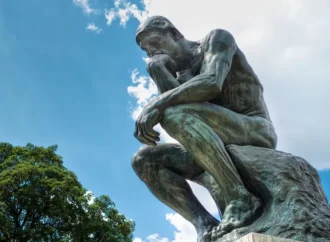
Why It’s So Important That Our Beliefs About Reality Are Accurate0
- Featured, Philosophy
- September 9, 2026
Often the most difficult questions to actually answer are the simplest ones to ask. We can easily answer the question, “What is a hammer?” by simply referring to the materials, the shape, and the purpose of the hammer. It gets slightly more difficult, however, when asking a question like, “What is justice?” or “What is
READ MORE
Why Mysteries Are Good for the Rational Soul0
- Culture, Featured, Literature, Philosophy
- September 2, 2026
Mysteries and crime fiction hold a special kind of appeal. Just look at the immense popularity of true crime podcasts, police procedurals on network TV, or the undying interest in the works of Agatha Christie. Some of the earliest forms of literature we have are mysteries, such as “Oedipus Rex,” and some of the greatest
READ MORE
Are You Guilty of Fleshism?0
- Culture, Featured, Philosophy
- September 1, 2026
Be careful not to let your latent prejudice show, lest you reveal yourself as an enemy to progress! Indeed, you may not have heard of fleshism, but your preference for embodied human existence betrays you. “Fleshism,” is considered a type of “discrimination” to the transhumanist movement, which seeks to improve the human condition and person
READ MORE

The Importance of Building Small0
- Culture, Featured, Philosophy, Politics
- August 25, 2026
I am not a carpenter, and my hands are more comfortable on a keyboard than a skill saw. But I took it upon myself to try to build something this summer, namely, a coat closet and built-in cabinets with a window seat around the window in our entryway, where coats and boots and other outdoor
READ MORE
Sophie Cunningham and the Philosophical Reason Bodies Matter0
- Culture, Entertainment, Featured, Philosophy
- August 25, 2026
Considerable backlash erupted from Women’s National Basketball Association (WNBA) members and fans after player Sophie Cunningham made commonsensical remarks about the participation of biological males in women’s sports. This backlash, in turn, led to a re-evaluation of the WNBA’s policies. It seems we have yet another instance where we must ponder Matt Walsh’s infamous question,
READ MORE
Fragmented Attention? It Isn’t Just Your Brain.0
- Culture, Featured, Philosophy, Religion, Science
- August 24, 2026
If we’re following culture’s prevailing train of thought, we’ve grown accustomed to considering our failing attention spans as the product of our brains. Our culture constantly prompts mental hyperactivity, and our brains are slowly being rewired to crave the instant dopamine hits that online platforms can give. Indeed, the conversation around attention focuses heavily on
READ MORE

Most Read from past 7 days
Is Beauty Really in the Eye of the Beholder?
- Culture, Featured, Philosophy
- October 6, 2026
Most Read from past 30 days
Would You Rather Be Just, or Only Seem So?
- Featured, Philosophy
- September 28, 2026
Most Read of All Time
Why Are So Many Young People Dying Suddenly?
- Politics, Philosophy, Science
- June 28, 2022
Most Read of All Time
What Did Nietzsche Mean by ‘God is Dead’?
- Culture, Philosophy, Religion
- February 5, 2024
Latest Posts
-

Is Beauty Really in the Eye of the Beholder?
- Culture, Featured, Philosophy
- October 6, 2026
-

The Way Out of Marxist Racial Tension
- Culture, Featured, Philosophy, Politics
- October 5, 2026
-

Would You Rather Be Just, or Only Seem So?
- Featured, Philosophy
- September 28, 2026
-

Can God Be Truly Good When There Is Suffering?
- Culture, Featured, Philosophy, Religion
- September 28, 2026
Top Authors
-

Annie Holmquist
ADMINISTRATOR
-

Jon Miltimore
AUTHOR
-

Jeff Minick
CONTRIBUTOR
-

Daniel Lattier
AUTHOR