Most Read from past 24 hours
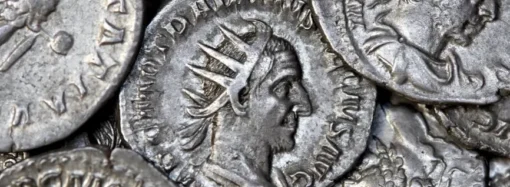
Owning a Piece of History: Why Artifacts Matter
- Culture, Education, Featured, History, Western Civilization
- April 1, 2026
Most Read from past 24 hours
Most Read from past 7 days
Most Read from past 30 days
Most Read of All Time
Most Read of All Time








Jacques Ellul’s Propaganda: The Formation of Men’s Attitudes (1965) has been called “a far more frightening work than any of the nightmare novels of George Orwell.” In it, the French philosopher and sociologist dispels some of the popular notions about propaganda and exposes how it really operates in the modern world. In the first chapter
READ MORE
America’s Founding Fathers were the men who “gave us stars to steer by,” in the words of David McCullough. Their values shaped their vision, which in turn shaped the great American Experiment undertaken in 1776. The Framers were rather fond of looking back on antiquity to better understand the human story. It helped them better
READ MORE
It’s hard to look at a TV, phone, magazine rack, or computer screen and not see the mug of James Comey right now. The former FBI Director is not only promoting his controversial new book A Higher Loyalty; he also finds himself in the crosshairs of President Trump’s Twitter account. Slippery James
READ MORE
Discovered on July 19 in 1799 by the French, the Rosetta Stone proved to be one of the most important historical discoveries in the history of, well… history. As the most popular artifact in the British Museum, it sees most of the Museum’s 6.8 million visitors each year. Below are eight facts about the now
READ MORE
In 1987 Allan Bloom’s The Closing of the American Mind was published. It represented a penetrating critique of higher education in America. Almost thirty years later, his criticisms—including the following eight—are still very much relevant: 1) “Fathers and mothers have lost the idea that the highest aspiration they might have for their children is
READ MORE
Dr. Arturo Casadevall and Dr. Ferric C. Fang correctly distilled down the scientific method into a five word query: “but what if I’m wrong?” One would hope that as these two microbiologists step out of the comfort zone of their field into the politically charged and messaging-driven world of environmental science and policy they ask
READ MORE