Most Read from past 24 hours
Like It or Not, It’s Time To Do Away With No-Fault Divorce
- Family, Featured, Uncategorized, Western Civilization
- April 10, 2026
Most Read from past 24 hours
Most Read from past 7 days
Most Read from past 30 days
Most Read of All Time
Most Read of All Time










It’s undeniable that today’s education system has problems. Evidences of declining academics and behavior are everywhere in the schools. But coming face to face with this reality leaves us with a big question: what do we do to right the ship? Furthermore, what does good education look like? Author and educator David Hicks provides an
READ MORE
Before America’s public education system was created around 1840, the vast majority of Americans were illiterate and walked around with dirt on their faces. At least, that seems to be the impression shared by most people today. But it turns out that education, like nature, abhors a vacuum. In the decades after the American Revolution—much
READ MORE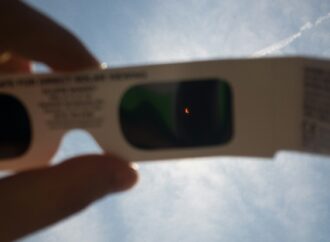
A total eclipse crossed the country this week in a display of natural wonder. Rather than seize the opportunity for an engaging science lesson, hundreds of school districts with several hundred thousand students decided to close for the day, many citing safety concerns that students might accidentally look at the eclipse without proper eye protection. Even worse
READ MORE
The title of this essay, “Education as if Truth Mattered,” is taken from the subtitle of Christopher Derrick’s book, Escape from Scepticism: Liberal Education as if Truth Mattered, published in 1977. Derrick’s subtitle was itself borrowed and adapted from the subtitle of E. F. Schumacher’s international bestseller, Small is Beautiful: Economics as if People Mattered,
READ MORE
Doom and gloom headlines are a dime a dozen these days, as people in the media continue to fixate on the problems in Washington, crime on the streets, and tragedies abroad. Thus it was that the following headline in the Minneapolis Star Tribune caught my eye for the simple reason that it focused on something positive and
READ MORE
When I was little, I used to play teacher with my sister. I would write letters on a little chalkboard and sound them out for her in an effort to teach her to read. Later, as a teen, while working at some horse stables, my boss recognized in me a gift for teaching and appointed
READ MORE