
Most Read from past 24 hours
Feeding Mind, Pursuing Truth
Religion
- Home
- Religion

Neurotheology, a Bridge Between Religion and Science0
- Culture, Featured, Philosophy, Religion, Science
- September 11, 2026
An emerging field of psychology is recognizing the profound link among religious experience, the brain, and mental health. It’s called “neurotheology,” a multidisciplinary field that studies the relations between religion and the human brain. “Neurotheology is a two-way street so that it is not just neuroscience studying religion or religion commenting on neuroscience,” said Dr. Andrew Newberg, a neuroscientist and pioneer in the field, in an
READ MORE
Fragmented Attention? It Isn’t Just Your Brain.0
- Culture, Featured, Philosophy, Religion, Science
- August 24, 2026
If we’re following culture’s prevailing train of thought, we’ve grown accustomed to considering our failing attention spans as the product of our brains. Our culture constantly prompts mental hyperactivity, and our brains are slowly being rewired to crave the instant dopamine hits that online platforms can give. Indeed, the conversation around attention focuses heavily on
READ MORE
The Traditional Christian Virtue That Best Predicts Relationship Success0
- Culture, Featured, Philosophy, Religion
- August 18, 2026
There’s an old story about a psychologist inching his way up a battered, gray-and-white speckled mountain. He scrapes and scrabbles his way up the cliff faces and ice walls, a breathless ascent, thinking all the time that he’ll enjoy in solitude an indescribable view with the knowledge of being the first person to ever scale
READ MORE
Does God Need My Worship?0
- Featured, Philosophy, Religion
- August 18, 2026
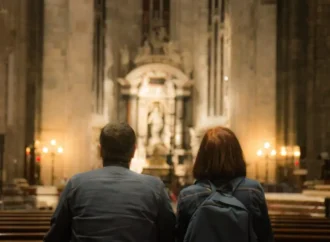
Why does God need my worship? The first response to this question, if one is really talking about God, should be “God doesn’t!” But why doesn’t He? A common objection to “going to church” is that an all-powerful, all-knowing, all-good God should not need anyone to get together and sing songs about him. It’s true
READ MORE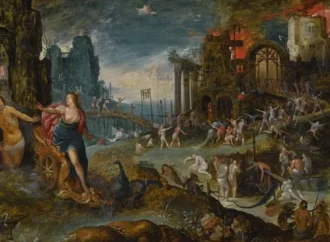
Why Does Dante Place Odysseus in Hell?0
- Culture, Entertainment, Featured, Literature, Philosophy, Religion, Western Civilization
- August 12, 2026
One of the most talked-about movies of the year, for so many different reasons, is Christopher Nolan’s adaptation of Homer’s “Odyssey.” The film has generated identity-politics controversies, classicist controversies, and Christian controversies (from Christians and anti-Christians). One of the lightning rods for arguments and thought-pieces is the proposed “Christianization” of Odysseus, illustrated by his guilt for the trickery of
READ MORE
Sacred or Secular Surrender: Christianity’s False Dichotomy0
If you’ve grown up in evangelical Christian circles, you’ve heard it: “John Smith has surrendered to missions in South Africa” or “Timothy Name has surrendered to the pastoral call.” Usually, the phrase involves the word “surrender” along with some widely accepted “spiritual” calling: missions, typically, but occasionally pastorship or some other form of ministry. Yet
READ MORE

Most Read from past 7 days
Neurotheology, a Bridge Between Religion and Science
- Culture, Featured, Philosophy, Religion, Science
- September 11, 2026
Most Read from past 30 days
Fragmented Attention? It Isn't Just Your Brain.
- Culture, Featured, Philosophy, Religion, Science
- August 24, 2026
Most Read of All Time
What Did Nietzsche Mean by ‘God is Dead’?
- Culture, Philosophy, Religion
- February 5, 2024
Most Read of All Time
21 Men Chose Death Over Renouncing Their Christian Faith. Why?
Latest Posts
-

Neurotheology, a Bridge Between Religion and Science
- Culture, Featured, Philosophy, Religion, Science
- September 11, 2026
-

Fragmented Attention? It Isn't Just Your Brain.
- Culture, Featured, Philosophy, Religion, Science
- August 24, 2026
-

-

Does God Need My Worship?
- Featured, Philosophy, Religion
- August 18, 2026
Top Authors
-

Annie Holmquist
ADMINISTRATOR
-

Jon Miltimore
AUTHOR
-

Jeff Minick
CONTRIBUTOR
-

Daniel Lattier
AUTHOR