
Feeding Mind, Pursuing Truth
Blog 3 Columns
- Home
- Blog 3 Columns
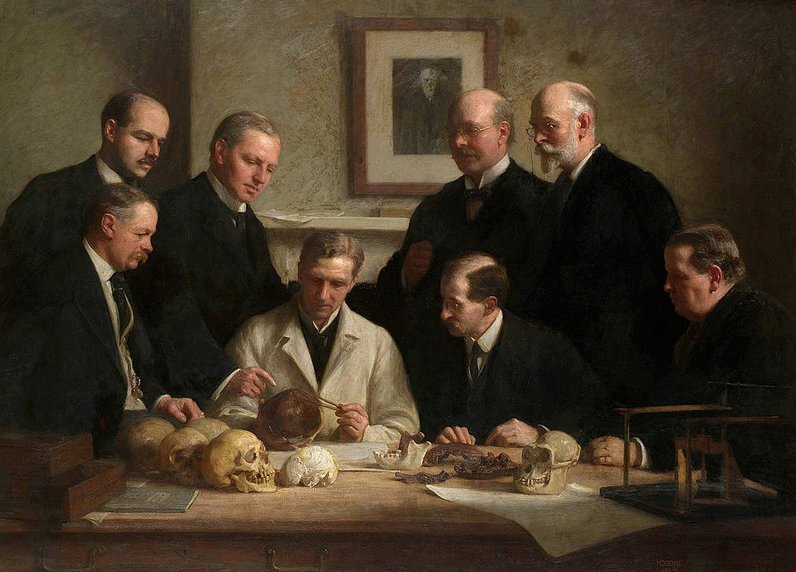
Behind Closed Doors: What the Piltdown Man Hoax from 1912 can Teach Science Today0
- History
- May 19, 2017
In 1912, Charles Dawson, an amateur archaeologist in England, claimed he’d made one of the most important fossil discoveries ever. Ultimately, however, his “Piltdown Man” proved to be a hoax. By cleverly pairing a human skull with an orangutan’s jaw – stained to match and give the appearance of age – a mysterious forger duped
READ MORE
Yale Dean’s Nasty Yelp Reviews Expose Underbelly of Ivy League Elitism0
- Culture
- May 18, 2017
Via the Washington Post: “As the dean of Yale University’s Pierson College, June Chu is responsible for advising about 500 students and fostering ‘a familiar, comfortable living environment’ in keeping with the university’s residential college system. Chu’s biography states she has a PhD in social psychology and touts a long career in which she has
READ MORE
Why More Parents Need to Say ‘No’ to Their Children0
- Culture
- May 18, 2017
When I was around 5 years old, a neighbor friend of mine had a huge, Victorian dollhouse. She never seemed all that interested in it, but I thought it was beautiful. So much so, that in the years following, I would often look longingly at similar dollhouse kits at the local craft store. Alas, the
READ MORE

Teacher Licensure Laws Are Keeping Some of America’s Top Educators Out of Schools0
- Education
- May 18, 2017
My homeschooled children take weekly math classes with a gifted teacher who has been teaching math to kids for more than 30 years from her cozy city home. After receiving undergraduate and graduate degrees in mathematics from the Massachusetts Institute of Technology (MIT), she decided that offering math tutoring and enrichment classes would enable her
READ MORE
Let’s Hit Left-Wing Colleges Where It Hurts. In the Pocketbook.0
- Economics
- May 18, 2017
Parents, taxpayers, and donors have little idea of the levels of lunacy, evil, and lawlessness that have become features of many of today’s institutions of higher learning. Parents, taxpayers, and donors who ignore or are too lazy to find out what goes on in the name of higher education are nearly as complicit as the
READ MORE
Female Applicant Rejects Ivy League School After Receiving Gender Neutral Acceptance Letter0
- Culture
- May 18, 2017
This story has made the rounds in some major media and much social media. Which means it still stands out in this tense cultural climate with gender ideology pervading institutions, politics and media. And the topic of many of Pope Francis’ addresses. This time, it was Brown University, “one of the country’s most selective undergraduate colleges” according to this Wall
READ MORE

Bill Nye’s Doomsday Predictions on Overpopulation Get Lambasted0
- Culture
- May 18, 2017
Bill Nye has been in the news a lot lately, mostly as the result of the hyperbolic predictions he is prone to making, many of which are backed up with very little science. Whether it’s on gender identity, global warming, or philosophy, Nye can often be found serving up “a gold mine of fallacies, half-truths,
READ MORE
Are American Schools Creating a ‘Stupefied’ Generation?2
- Education
- May 18, 2017
In recent months, it has been reported that studying and performing Shakespeare has dramatic effects on the academic performance of young students. In fact, one school in Australia found their exam scores increased more than 40 percentage points after Shakespeare lessons were incorporated into the curriculum. Because of these dramatic effects, I took notice of
READ MORE
Why Did Comey Say Nothing if Trump Asked Him to ‘End His Investigation’?0
- Politics
- May 17, 2017
Headlines everywhere are declaring that President Donald Trump asked FBI Director James Comey to “end his investigation of Michael Flynn.” The headlines appear to derive from memos Comey took after meetings with Trump—meetings Comey felt were “improper”—as well as anonymous sources who claim to have seen the memos. The evidence of Trump’s possible obstruction, which
READ MORE